
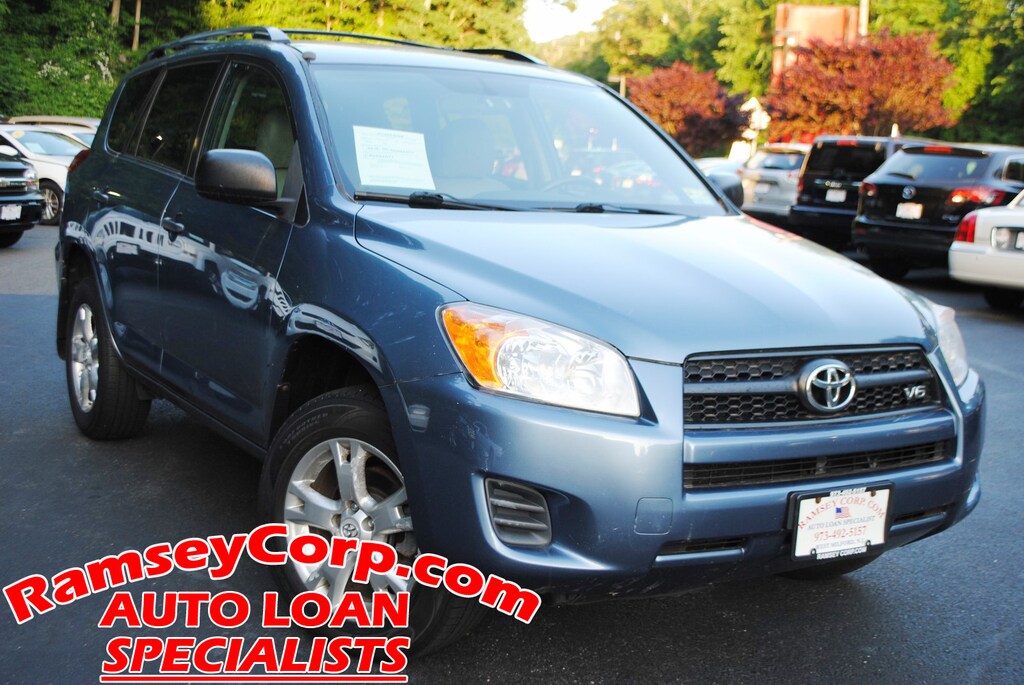
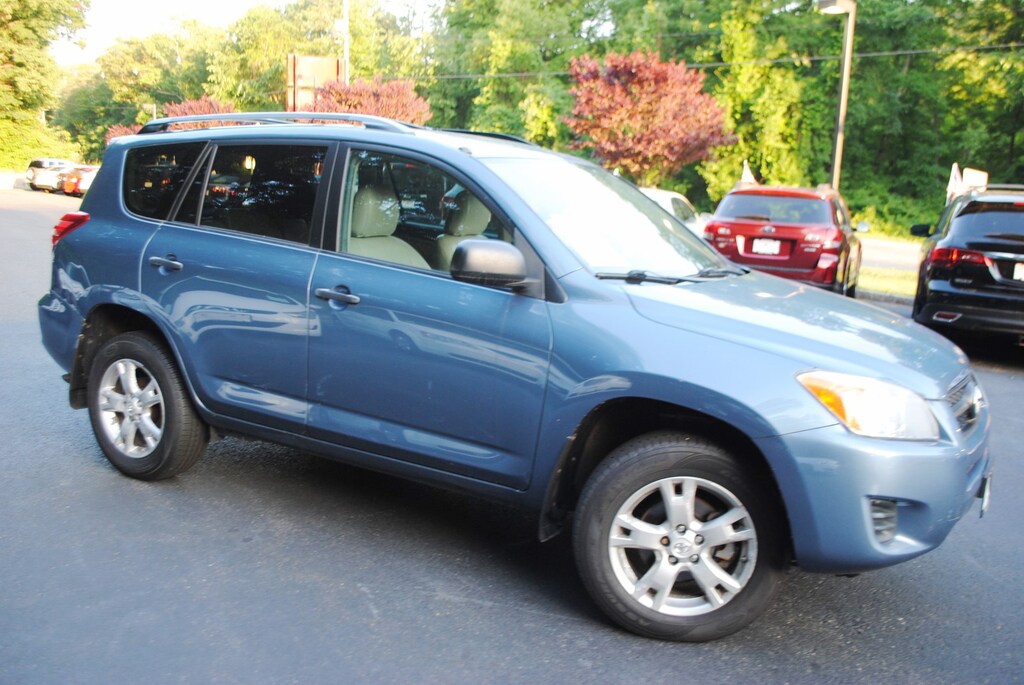


Leather / Heated Seating
3RD Row Seating
ONE OWNER
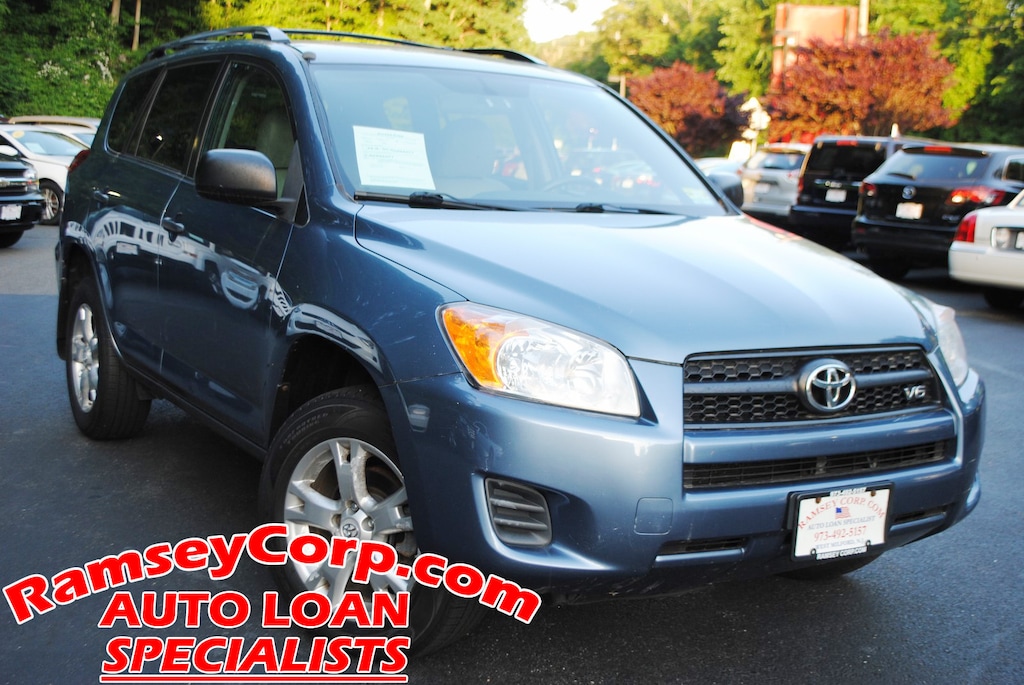
2009 TOYOTA RAV4
2T3BK35V09W006060
4 DOOR WAGON/SPORT UTILITY
3.5L V6 F DOHC 24V
ALL WHEEL DRIVE
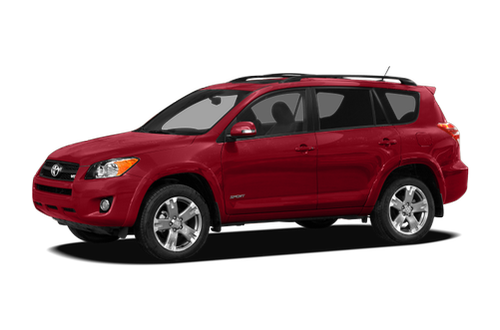
Every time they're completely redesigned, the most competitive car models tend to leapfrog each other — in terms of quality, features and often size. The RAV4's most recent leap was in 2006, and since then, the compact SUV class has resembled a plague: Many new frogs have leapt into the market, and others have gotten new leases on life and leapt back into action. While the 2009 RAV4 remains one of the top-selling compact SUVs on the market, and one of only two that offer third-row seats, it now has plenty of company, and some of its attributes — mileage, ride, refinement, interior — are looking dated and less attractive. (It happens to us all.) If Toyota wants to keep its place in the small-SUV frog race, it will need to warm up those hind legs right quick.
Ride & Handling
Despite improved refinement and healthy sales since its 2007 redesign, the best-selling Honda CR-V rides too firmly for me. The Toyota is better, in my opinion — but by a narrower margin in the RAV4 Sport 4x4 that I drove, because it has a firmer suspension than the other trim levels. It also gets 18- rather than 17-inch wheels, which tend to firm things up further. (Throw in my car's run-flat tires, which are part of an option package, and you have the firmest of all the RAV4s.) You feel the road surface, and there's plenty of body motion when moving in a straight line — again, better than the CR-V we tested, but often present nonetheless. Over time, I've come to recognize that spring and shock absorber firmness is as important as suspension type — and possibly more: The RAV4 was revolutionary 13 years ago when solid rear axles and truck-based SUVs were the norm because it had a four-wheel independent suspension. This design, which now dominates the compact SUV class, is always superior on paper, but it doesn't guarantee comfort or performance. Ultimately, I found the RAV4 Sport comfortable enough over several days and a few hundred miles. If I had to single out a competitor with an exceptionally comfortable ride in this class, it would be the Ford Escape.
What I question is whether the RAV4's sport suspension is even necessary. The goal may be sportier handling, and the suspension tuning and 18-inch wheels couple with the car-based design to deliver just that: sportier handling. I'm not sure I'd call it sporty, though. The car is well behaved in curves, and standard electronic stability control helps keep the driver out of trouble. It feels stable enough, but it's still not a car — or even the small vehicle it once was — and the higher center of gravity doesn't lend the confidence one needs in order to drive in a spirited fashion. To me, the CR-V and Subaru Forester feel sportier without needing special features.
Power to Spare
There was a time when compact SUV base engines were just adequate, but for the most part the class now offers the right combination of engine power and five- or six-speed transmissions, providing enough acceleration for the vast majority of buyers. For anyone who needs more than enough — or wants to tow 2,000-3,500 pounds rather than the base 1,500 pounds — Toyota offers an optional 3.5-liter V-6. Even with the added weight of all-wheel drive, my test car accelerated with authority. Fill it with passengers and cargo, then hook up the maximum trailer load (after adding the optional Towing Prep Package), and you could definitely call the V-6 necessary. If the goal is sportiness, however, I find it hard to justify.
People who aren't intoxicated or delusional recognize that gas prices will climb again. An EPA-estimated 19/26 mpg city/highway for a V-6 with all-wheel drive isn't bad at all, but why not go with the four-cylinder's 22/28 mpg (21/27 mpg with all-wheel drive)? The current generation RAV4's excellent base gas mileage was one of its claims to fame, which it retained even when the reworked 2007 CR-V rated 20/27 mpg. But since then, an upgraded drivetrain has brought parity to the manual Ford Escape, and the 2010 Chevrolet Equinox (auto only) boasts an astonishing 22/32 mpg. The RAV4's record, and the fact that its respectable mileage comes from four- and five-speed automatics, suggest it could leapfrog the competition when it's next redesigned, but for the time being there are more frogs than ever, and some appear to be on a diet.
| Compact SUV Gas Mileage | |||||||||||||||||||||||||||||||||||||||||||
|---|---|---|---|---|---|---|---|---|---|---|---|---|---|---|---|---|---|---|---|---|---|---|---|---|---|---|---|---|---|---|---|---|---|---|---|---|---|---|---|---|---|---|---|
| Front-wheel-drive base models (manual/auto, mpg) | |||||||||||||||||||||||||||||||||||||||||||
| City | Highway | Combined | |||||||||||||||||||||||||||||||||||||||||
| 2009 Toyota RAV4 | —/22 | —/28 | —/24 | ||||||||||||||||||||||||||||||||||||||||
| 2010 Chevrolet Equinox | —/22 | —/32 | —/26 | ||||||||||||||||||||||||||||||||||||||||
| 2009 Ford Escape | 22/20 | 28/28 | 24/23 | ||||||||||||||||||||||||||||||||||||||||
| 2009 Honda CR-V | —/20 | —/27 | —/23 | ||||||||||||||||||||||||||||||||||||||||
| 2009 Hyundai Tucson | 20/20 | 26/25 | 22/22 | ||||||||||||||||||||||||||||||||||||||||
| 2009 Jeep Patriot | 23/23 | 29/27 | 25/24 | ||||||||||||||||||||||||||||||||||||||||
| 2010 Kia Sportage | 20/20 | 25/25 | 22/22 | ||||||||||||||||||||||||||||||||||||||||
| 2009 Nissan Rogue | —/22 | —/27 | —/24 | ||||||||||||||||||||||||||||||||||||||||
| 2010 Saturn Vue | —/19 | —/26 | —/22 | ||||||||||||||||||||||||||||||||||||||||
| 2010 Subaru Forester | 20/20 | 27/26 | 22/22 | ||||||||||||||||||||||||||||||||||||||||
| 2010 Mitsubishi Outlander | —/21 | —/27 | —/24 | ||||||||||||||||||||||||||||||||||||||||
| Source: EPA | |||||||||||||||||||||||||||||||||||||||||||
The Inside
Though the original RAV4 started its life small by today's standards, its incremental growth has kept its cabin space competitive. Seating dimensions are surprisingly close among the class leaders. Anomalies include the Forester's notably greater front legroom and front and backseat headroom. Among the backseats, the Escape's legroom is short by full inches, and the Equinox is ahead of the curve, with 1.6 inches more legroom than the RAV4, which is comfortably midpack in most seating dimensions.
Of course, that's all about measurements, which never tell the whole story. For example, the RAV4's driver's seat has a generous height range, which you jack up or down via a large lever. It has a relatively short bottom cushion, though, which some drivers find lacking in thigh support on longer drives. The backseat is a similar story: Some passengers find the cushions too firm, but Toyota deserves recognition for how flexible the seats are. They're split 60/40, they adjust forward and back, and there's a standard flip-down center armrest. The backrests also recline, though the release lever is behind the passenger's outboard shoulder and is difficult to reach when seated. The backseat provides good legroom in real-life usage.
This would be a versatile setup even in a five-seater, but the fact that the RAV4 offers an optional third-row seat makes it more impressive. Historically, adding seats has meant robbing space from the others, even if you don't choose the third-row option. That's the beauty of the sliding second-row seats; in the RAV4, the third-row option imposes no sacrifice on the five-seater, and the three-row model loses only 1 cubic foot of second-row passenger volume and none of its maximum cargo space when the third row's in the floor. The third row is by no means roomy, but it'll do in a pinch, and there's not much downside to buying it for infrequent use — apart from its cost and added weight.
Cargo
Buyers who forgo the third row will benefit from an underfloor cargo space that's designed to store the folded seats in models that have them. You get a bin underneath the cargo floor and a wide tray immediately behind the backseat. It both adds space and hides items from view. Retractable cargo covers — also an option in the RAV4 — may hide valuables, but their presence suggests to prying eyes that there's something of value below.
The RAV4's passenger and cargo volumes are generous among the class leaders. It seems a longer truck than the others, but once you subtract the rear-mounted spare tire (which you can literally do on the Sport V6 with the optional Sport Appearance Package), the RAV4 is on par. For what it's worth, the Equinox's interior is on the tighter side despite being even longer than the RAV4.
| SUV Capacities: Leading Compact Models | ||||||||||||||||||||||||
|---|---|---|---|---|---|---|---|---|---|---|---|---|---|---|---|---|---|---|---|---|---|---|---|---|
| Cargo volume behind backseat (cu. ft.) | Cargo volume seats folded (cu. ft.) | Passenger volume (cu. ft.) | Vehicle length (in.) | |||||||||||||||||||||
| 2009 Toyota RAV4 | 36.4* | 73.0 | 108 | 181.1 | ||||||||||||||||||||
| 2010 Ford Escape | 29.2 | 66.3 | 100 | 174.7 | ||||||||||||||||||||
| 2009 Honda CR-V | 35.7 | 72.9 | 104 | 177.9 | ||||||||||||||||||||
| 2010 Subaru Forester | 33.5 | 68.3 | 108 | 179.5 | ||||||||||||||||||||
| 2010 Chevrolet Equinox | 31.4 | 63.7 | 100 | 187.8 | ||||||||||||||||||||
| * five-seat model; seven-seater with third row folded is 37.2 cu. ft.; 12.3 cu. ft. behind raised third row. ** base measurement; 178.7 cu. ft. in Sport 4x4 with Sport Appearance Package (eliminates rear-mounted spare tire). Source: Manufacturers | ||||||||||||||||||||||||
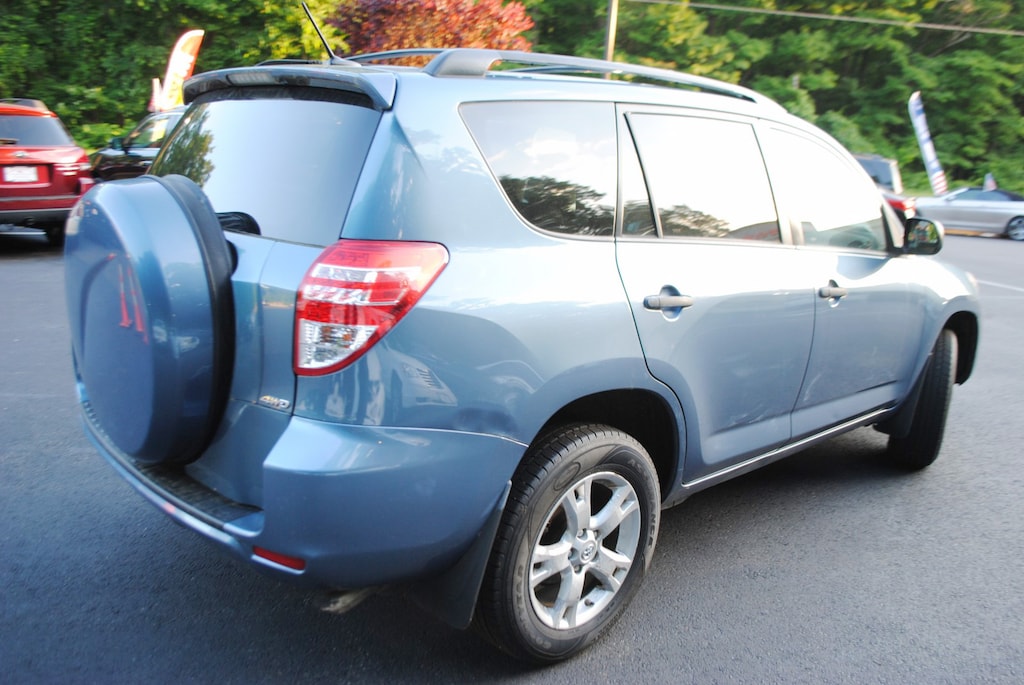
Unfortunately, all of this versatility may be moot because of the RAV4's swing gate, a feature I dislike and some shoppers consider a deal-breaker. Rather than lifting upward like a liftgate, the RAV4's cargo door swings to the side. The objective is to give the spare tire a place to live that doesn't steal space from inside the truck. Why not hang it underneath, like many models do? The historical reason is that it can compromise off-road ability and/or otherwise interfere with "packaging" — the location, size and shape of things like the suspension and gas tank.
The problem is that the gate requires a lot of room behind the RAV4 to open — enough to complicate parking in ways that liftgates don't: It disqualifies some parking spots outright and can hinder cross-traffic in a parking lot. It also blocks passage to one side, and because this is a Japanese model, it opens to the right, meaning a street parker is forced to load and unload larger items in traffic rather than from the curb. The previous-generation CR-V's gate was the same; now it raises. The original Jeep Liberty had a gate that swung in the opposite direction, and even that was replaced by a liftgate later on. It was no accident. Off-road ability isn't a valid justification in a light-duty model like the RAV4, so I hope for its own sake that Toyota has a liftgate on the drawing board for the next generation.
Wrinkles and Age Spots: RAV4 in the Market
The swing gate isn't the 2009 RAV4's only sign of age. The interior design is a little dated — serpentine shift gates were never a good idea, and it's time for them to go away — but it's the materials quality that has lost the most luster in today's field. The RAV4 was respectable in 2006, but the 2007 CR-V incorporated some (but not all) higher-quality materials, the 2008 Forester is very nicely appointed, and the 2010 Equinox's cabin is enough to put any reluctant taxpayer-investor at ease.
The RAV4's reliability history remains above average, but again, competitors have improved. Currently the CR-V leads. The RAV4 has Good ratings from the Insurance Institute for Highway Safety in frontal, side-impact and rear crash tests, and it's designated a Top Safety Pick — but the CR-V and Escape are also TSPs, ranked just below the RAV4, and there are five models ranked above it — four of which have been introduced or redesigned since 2006. (See all the RAV4's safety features here.) This encapsulates the RAV4's position in today's market: highly rated, but now among newer competitors, some of which meet or exceed it in one or more aspects.
You can't take away from Toyota's pioneering achievements in crossover SUVs: The 1996 RAV4 was arguably the first car-based SUV, and the Lexus RX 300 became the crossover everyone wanted to be. Some of Toyota's reputation for brilliance and innovation is earned, but there are areas in which the company has taken years to get things right; its minivans and full-size pickups went through multiple generations before becoming truly competitive in the country that birthed both genres. Now Toyota is where the American minivan makers found themselves a few years ago: watching the other guys challenge and possibly surpass them in the genre they created. Maybe it's just where the current RAV4 is in its life cycle; the possibility of Toyota coming out with a new generation that retakes the lead really isn't much of a leap.