


Alanctara Interior / Steering Wheel
Bose Premium Sound System
Leather / Heated Seating
Ceramic Composite Brakes
Xenon Headlamps
Navigation
6-SPD
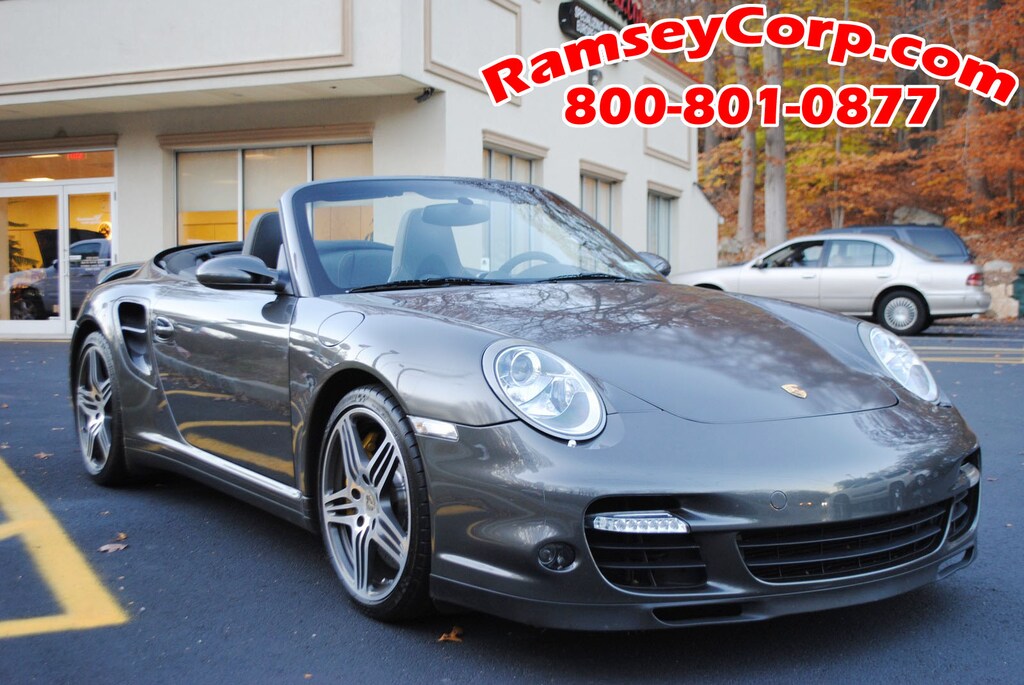
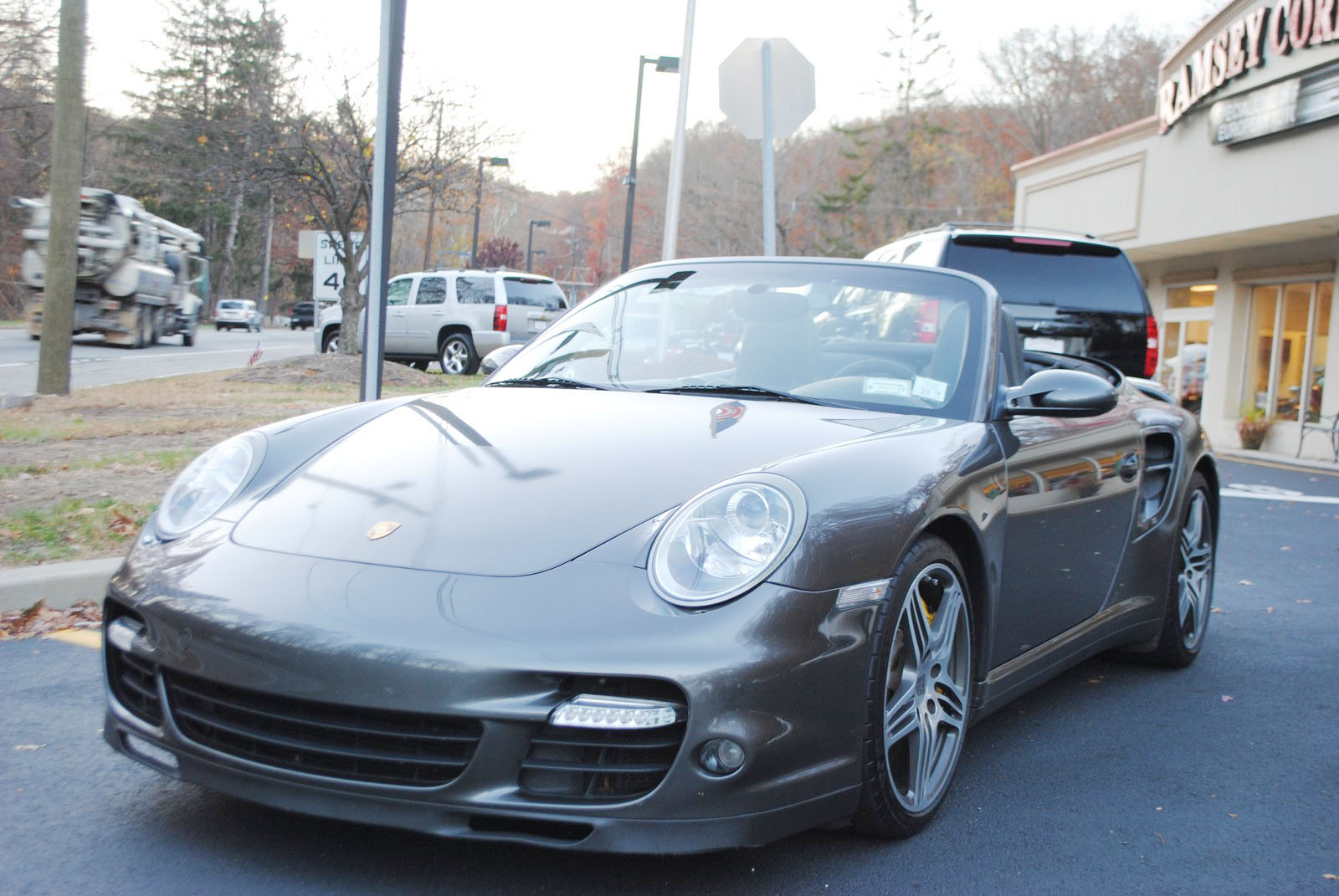
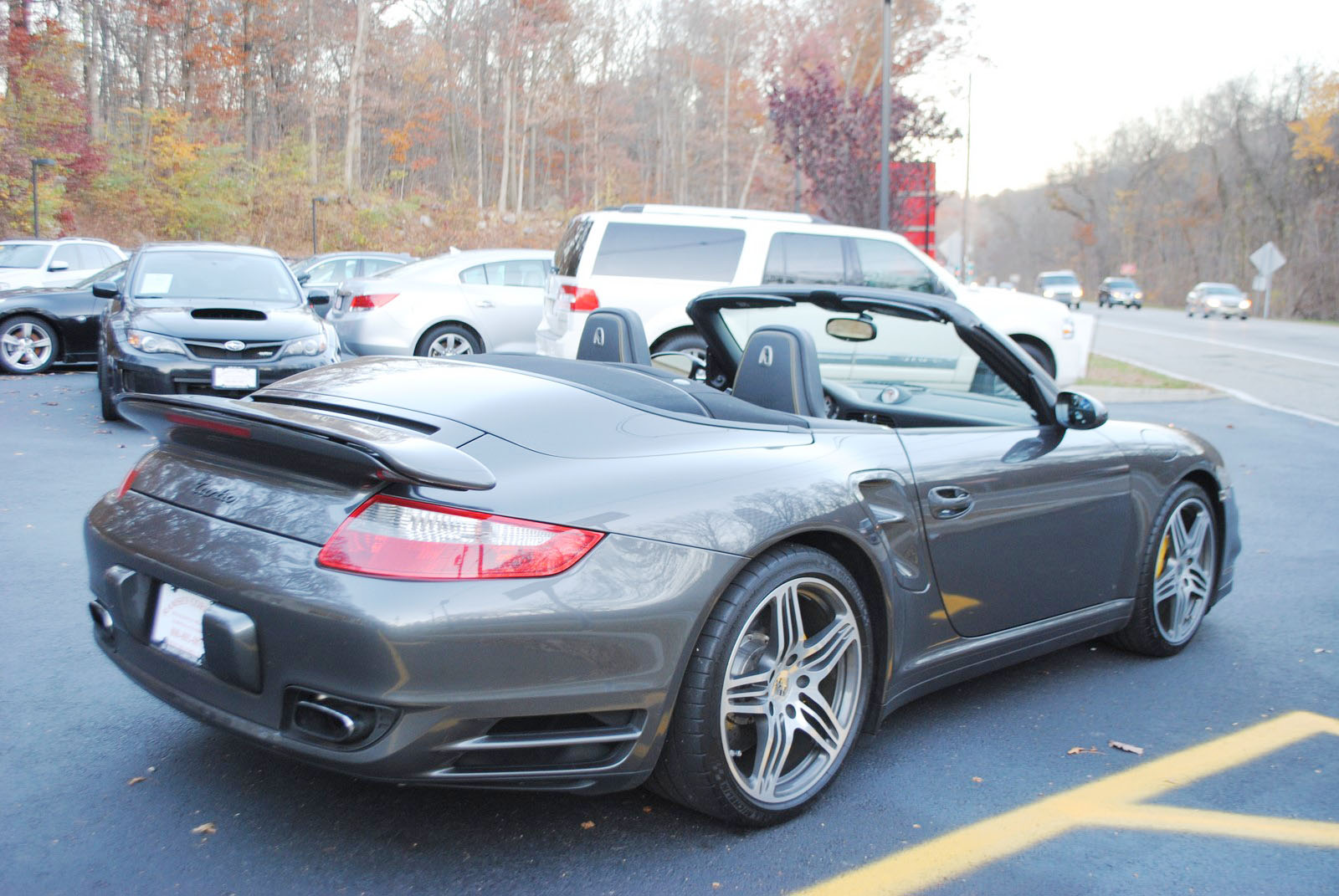
2008 PORSCHE 911 TURBO
WP0CD29968S789284
CONVERTIBLE 3.6L H6 FI DOHC
ALL WHEEL DRIVE
Vehicle Overview
Porsche's flagship 911 sports car has nearly half a dozen spinoffs for 2008. New to the lineup is a 911 Turbo-based 530-horsepower GT2, which is the most powerful production 911 yet. Also new is a Cabriolet drop-top version of the 911 Turbo. Still available are the track-ready 911 GT3 and GT3 RS coupes, the ultra-quick 911 Turbo coupe, and the glass-roofed 911 Targa 4 and Targa 4S. The 911's diverse lineup of power and prices brings on competition from cars ranging from the $46,000 Chevrolet Corvette to the $113,000 Aston Martin V8 Vantage.
Following is a description of the 911 Carrera models, which don't have any major changes for 2008.
(Skip to details on the: 911 Turbo 911 GT3 911 GT3 RS 911 Targa 911 GT2 )
Porsche's long-lived 911 got a major makeover for 2005, which included two distinct engines powering the Carrera and the Carrera S. A 3.6-liter flat-six-cylinder in the 911 Carrera produces 325 horsepower, while the Carrera S holds a 3.8-liter version that develops 355 hp. Motorsports enthusiasts can select a Sport Chrono Package Plus system with a dashboard-mounted stopwatch.
All-wheel-drive Carrera 4 and 4S coupes and cabriolets debuted for 2006 and are available with two-tone interior color schemes. An electronic logbook and tire pressure monitoring system are optional. An optional Power Kit for Carrera S models boosts output to 381 hp.
Exterior
Nearly devoid of extraneous trim, the low, smooth-bodied 911 looks the part of a serious performance machine. Porsche notes that the current 911 Carrera models have a wider track and a slimmer, more accentuated waistline. Anti-roll bar pivot points have been revised to reduce body roll. The aluminum springs are 70 percent lighter than earlier steel springs.
The 911 Carrera and Carrera 4 ride on standard 18-inch wheels, while the Carrera S and Carrera 4S hold 19-inchers. Neither model comes with a spare tire. Porsche Ceramic Composite Brakes are available.
The Porsche Stability Management system can be turned off. An available Porsche Active Suspension Management technology continually adjusts shock absorbers.
Interior
Called four-passenger automobiles by Porsche, 911s have plenty of space for front-seat occupants, but backseat riders are in for a major squeeze. Standard front seats adjust in six directions, while optional power seats adjust in 12 directions. Sport seats are available. As in prior 911s, the driver faces a large tachometer, and the ignition switch is on the left.
Under the Hood
Dubbed a boxer engine because of its horizontally opposed cylinder layout, the base, rear-mounted 3.6-liter six-cylinder develops 325 hp. The 3.8-liter six-cylinder in the Carrera S and Carrera 4S produces 355 hp and 295 pounds-feet of torque. Each engine teams with a six-speed manual transmission or a Tiptronic S five-speed automatic transmission that permits manual gear selection.
Safety
All-disc antilock brakes and six airbags — including seat-mounted side-impact airbags and head airbags that emerge from the windowsills — are standard.
Driving Impressions
The current models are comparatively easy to drive and quite civilized. They blend a reasonably smooth, extra-stable ride with vigorous performance and superior handling. Acceleration is energetic, even in non-Turbo models. The familiar engine whine isn't as omnipresent as it used to be, and the exhaust note is subdued yet exuberant. Porsche's six-speed manual gearbox is as good as they get.
Performance differences between the Carrera and Carrera S are noticeable — especially on a racetrack — but both deliver enthusiastic responses. Other than a brief downshift delay when coming out of curves, the Tiptronic operates impressively. Porsche's available Sport Chrono Package Plus instrument package is helpful for motorsports-minded drivers, but it's somewhat complicated and distracting. Even though the highway ride is super, the 911's suspension sometimes reacts harshly on rougher pavement.
911 Turbo
Previously available only as an all-wheel-drive coupe, the 911 Turbo lineup now includes a drop-top Cabriolet model that offers the same power, all-wheel drive and refined driving experience of the coupe, except with open air driving. A power-retractable cloth top is standard, while an aluminum hardtop — removable, but not retractable — is available.
Both the Cabriolet and the coupe dish out 480 hp from a rear-mounted six-cylinder engine — exceeding even the previous generation's limited-production 911 GT2 (477 hp). Updates go well beyond the new skin, with two variable-geometry turbochargers, a new all-wheel-drive system and an updated transmission.
Based on the crisply styled 911 Carrera, the Turbo adds an LED-bearing bar across both outboard portions of the lower front air dam. Tiny fog lights are tucked ahead of the 19-inch wheels. Twin gills behind each door funnel air into the rear-mounted engine's intercoolers, and the rear deck flows into a forward-canted spoiler. Lower body work includes slight underbody extensions all around.
At the heart of the 911 Turbo are two turbochargers, one per cylinder bank. Both turbos have adjustable turbine blades that alter their plane for faster or slower exhaust pickup. This allows variable compressor speeds that funnel optimized boost over a wider range than a conventional single-stage turbo can manage. Porsche's advanced VarioCam Plus valve-timing system sorts things out, and the resulting 480 hp beats the outgoing 911 Turbo S by 36 hp. Torque remains the same at 457 pounds-feet, though it's now available across a much wider range — 1,950 to 5,000 rpm instead of 3,500 to 4,500 rpm.
An available Sport Chrono Package gives drivers an "overboost" option during full-bore acceleration that provides 2.9 psi of additional boost and increases torque briefly to 502 pounds-feet.
Porsche updated the available five-speed automatic Tiptronic S transmission to allow for higher turbo boost at launch. It rockets the 911 Turbo to 60 mph in 3.4 seconds, which is slightly faster than the standard six-speed manual's 3.7 seconds. With either transmission, Porsche says, the 911 Turbo tops out at 193 mph.