
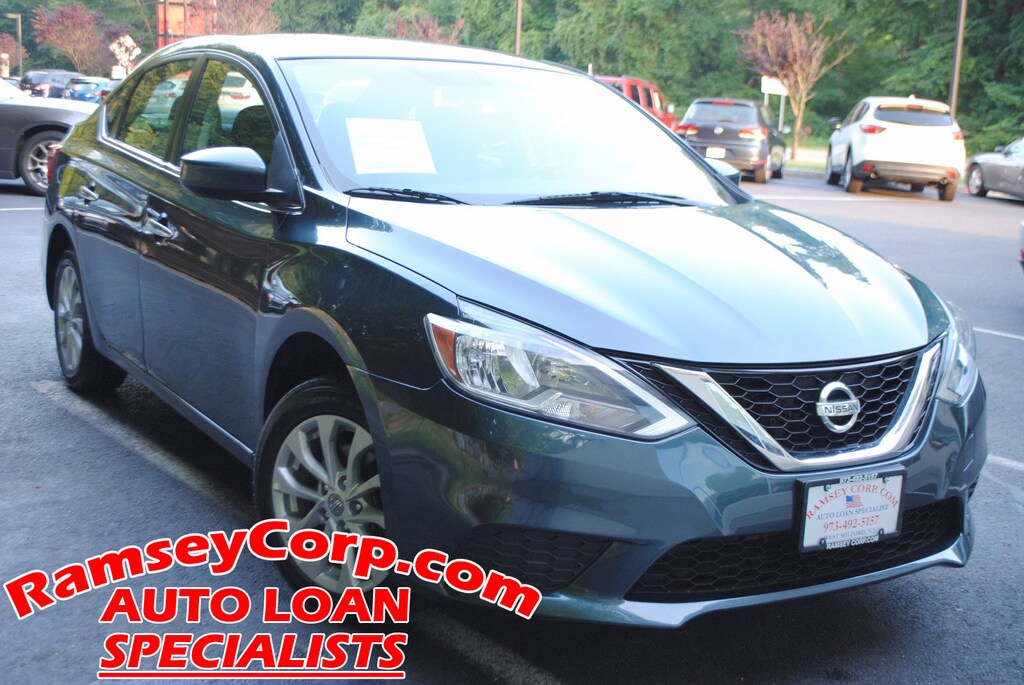
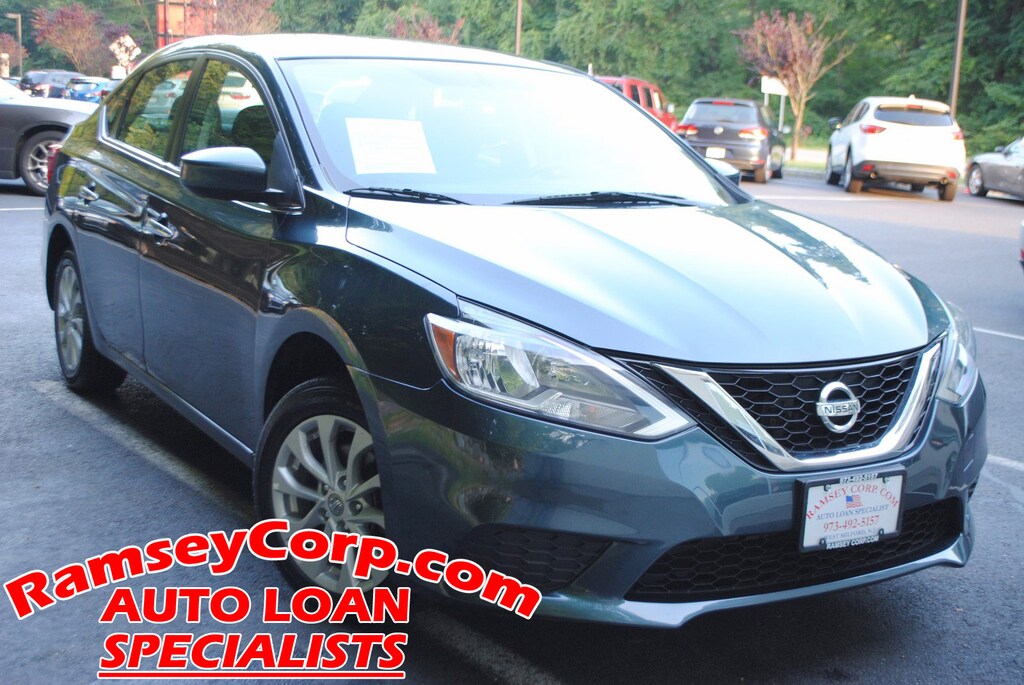
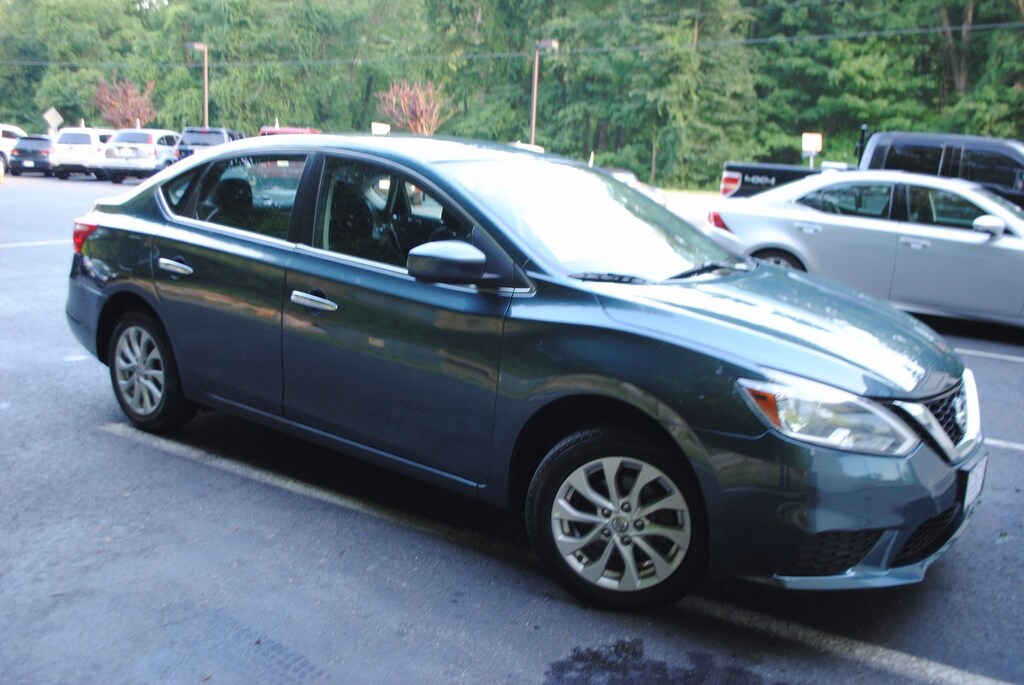
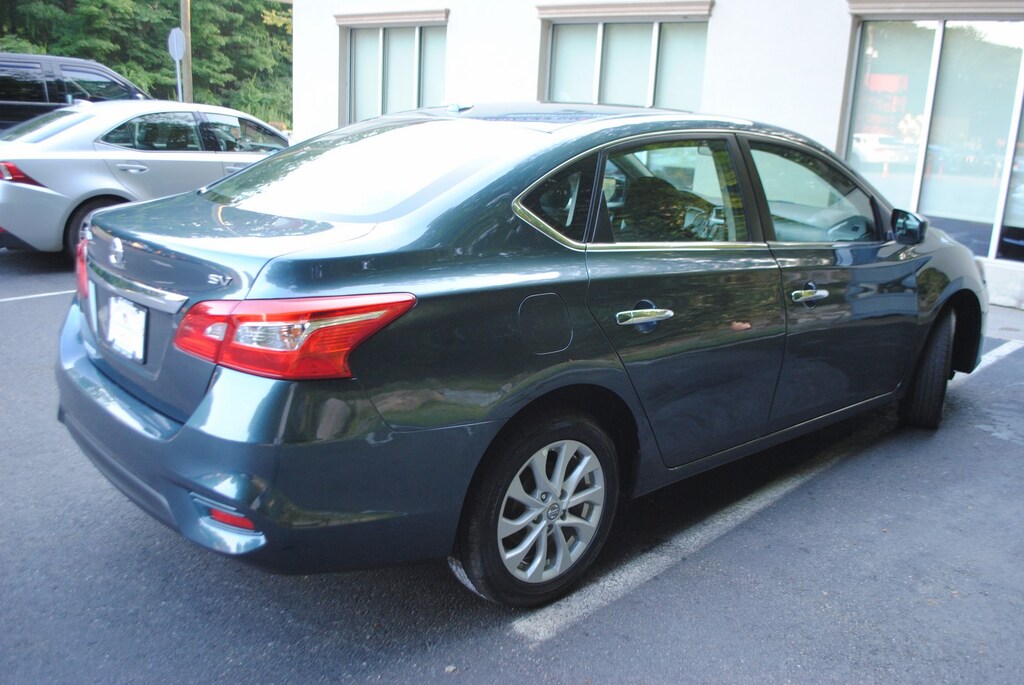


2016 NISSAN SENTRA SV
3N1AB7AP2GY334911
SEDAN 4 DR 1.8L I4 F DOHC 16V
FRONT WHEEL DRIVE
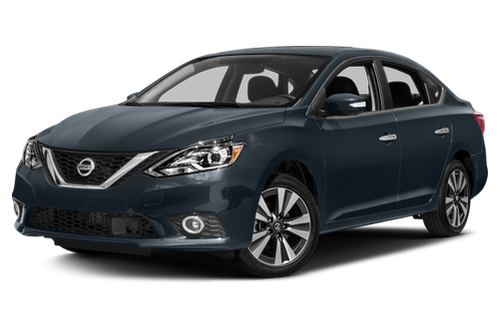
The verdict: The refreshed 2016 Nissan Sentra adds needed refinements to its styling and safety technology while retaining its two strongest selling points — good value and passenger room. But vague steering and sluggish acceleration remain.
Versus the competition: Improvements make the 2016 Sentra better overall but don’t give it a leg up over recently updated competition such as the 2016 Honda Civic, which is better to drive and has a nicer cabin. The Sentra does offer superior value with its lower trim levels, however.
Nissan has refreshed the 2016 Nissan Sentra in an effort to keep pace with the competition, including two main rival compact sedans that got full redesigns this year: the Honda Civic and Chevrolet Cruze. The refresh swaps 20 percent of the Sentra’s parts for new pieces and adds new technology and safety features as well. See the differences between the 2015 and 2016 versions of the Sentra here, and compare the Sentra with its competitors here.
The Sentra comes in five trim levels: S, FE+ S, SV, SR and SL. I drove both the SR and SL models around Orange County in Southern California to find out if the added features give the 2016 Sentra enough of a boost to keep up.
Exterior & Styling
The Nissan Sentra’s styling updates don’t modify the overall shape of the sedan, but there are changes aplenty up front, where everything forward of the A-pillars has been restyled. That means a new hood, front fenders, grille, headlights and bumper. The look is borrowed from the larger Nissan Maxima and Altima sedans and is a better direction than the sedate styling of the 2015.
Down the sides and in the rear, however, the body panels and shapes have not been changed save for some subtle tweaks to the rear bumper. The taillights get an updated design but sit in the same housing. Retaining the same high-walled, rounded greenhouse profile keeps the overall aesthetic the same and the Sentra still blends in too much for my tastes, especially when compared with the aggressively restyled 2016 Civic.
The most stylish Sentra is the SR trim, although it’s worth noting that all of its seeming “go-fast” parts are purely cosmetic. It gets special 17-inch alloy wheels, side skirts, a rear spoiler, fog lights and a chrome exhaust tip.
How It Drives
Not much has changed under the hood. The only engine is carried over from last year’s model: a 130-horsepower, 1.8-liter four-cylinder that is mated to a six-speed manual transmission or a continuously variable automatic transmission. The manual comes only on the base S trim level, on which the CVT is optional. All other trims have only the CVT.
With the same engine and only minor suspension tweaks, the Nissan Sentra’s driving experience remains an uninspiring proposition. There is nothing offensive about piloting the Sentra; it tracks well and the steering wheel tightens up nicely when on the highway to help keep you on center. But the pliant suspension and accurate but vague-feeling steering makes it more at home on straight roads. The engine is not aggressively tuned and when combined with the CVT feels a bit sluggish. Trying to get the Nissan Sentra to accelerate quickly is akin to getting a teenager to do chores; the dishes get done eventually, but it will take some nagging.
There is one strange quirk of the CVT that I noticed: Nissan has added artificial shift points to the CVT’s programming to make it feel more like a traditional automatic with separate gears. But while accelerating with some vigor, such as getting on a highway or passing, the engine will step down in the rpm range, as if it were upshifting, then climb back up. It’s a bit unnerving if you know the Sentra has a CVT. The programming isn’t completely sorted out so the CVT “shifts” at some awkward times as well. Nissan said that the new programming doesn’t affect fuel economy in either direction, but it’s an inorganic experience I’d prefer to skip.
Despite Nissan’s comment on the CVT, the Sentra’s fuel economy figures are slightly worse than last year’s model. The EPA estimates models with the manual transmission return 27/36/30 mpg city/highway/combined and those with the CVT get 29/38/32 mpg. The figures for the CVT are down slightly compared with last year’s model with the same powertrain (29/39/33 mpg). Nissan says it added sound-deadening material in the refresh to keep the cabin quieter, but the curb weight on the SR and SL trim levels is no more than 20 pounds heavier for 2016. Because the engine and aerodynamics are the same, I remain skeptical about the CVT tuning’s effect on fuel economy.
The efficiency-focused FE+ version of the S trim is EPA-rated 30/40/34 mpg. The Sentra, like the rest of the class, takes regular gasoline.
Interior
Included in the refresh are numerous interior upgrades, the highlights of which are added technology, improved materials and a new steering wheel borrowed from the 370Z that I really like. Both the seats and leather upholstery in the SR and SL models I tested improve on the previous generation. The seats are more comfortable and have a better-looking design than last year’s monochrome black leather.
Nissan also has made the Sentra quieter. Whether it’s cruising on the highway or navigating city streets, isolation is impressive for a car in this class. There is one exception to this though: during acceleration. Press the accelerator down more than halfway and the cabin is filled with an unnerving drone that doesn’t dissipate until you let off. The increased sound-deadening material mentioned earlier sits between the engine compartment and the cabin, but it is not enough.
My favorite part of the Nissan Sentra’s interior actually is the rear seat, which offers plenty of headroom and legroom (37.4 and 36.7 inches, respectively) along with great visibility. The Sentra can legitimately seat four adults comfortably even over long stretches.
Ergonomics & Electronics
The Nissan Sentra’s straightforward dashboard controls are no-frills, with an easily learned layout and controls that are easy to reach from the driver’s seat.
There is no standard dashboard screen with the base audio system. Nissan Sentra SV and SR trims add a 5-inch touch-screen audio system with NissanConnect Mobile Apps, which integrates Pandora and iHeartRadio internet radio as well as Facebook. Voice recognition and a hands-free text messaging assistant also are included in this system. The SL comes standard with a 5.8-inch touch-screen and navigation. The upgraded system also adds Google search capability to assist with destination and point-of-interest searches, TripAdvisor ratings and a host of SiriusXM services such as traffic and weather updates (this system is optional on the SV and SR). NissanConnect Mobile Apps uses your smartphone’s data connection, so you may pay extra for audio streaming, depending on your plan.
Nissan also has added new functionality to NissanConnect for 2016 with a subscription-based feature called Services (optional on the SR and SL). It uses a built-in cellular connection not included for other functions of NissanConnect, such as navigation and Mobile Apps. The basic plan offers safety features detailed below in the Safety section. A higher-cost plan also allows owners to set speed, curfew and boundary alerts for teen drivers, remotely lock and unlock the doors, and send directions to the navigation system via Google through the NissanConnect app.
There are two big problems with the Nissan Sentra’s infotainment system: no Apple CarPlay and no Android Auto. When asked if the technologies would be coming later in the year or if the system even could be upgraded to handle the technologies in the future, Nissan representatives refused comment on both fronts. Apple’s Siri Eyes Free voice recognition has been added on the SV trim level and above, but that isn’t enough to offset the exclusion of these two important features, especially considering that both appear on the 2016 Civic, 2016 Volkswagen Jetta, 2016 Cruze and 2017 Hyundai Elantra among rival compact sedans.
Cargo & Storage
The Nissan Sentra’s trunk has 15.1 cubic feet of cargo storage. This ties it with the Civic sedan among the segment leaders, trailing only the Jetta and its 15.7 cubic feet. A 60/40-split folding backseat is standard across all trim levels.
Safety
The 2016 Nissan Sentra earned top scores of good in all of the Insurance Institute for Highway Safety’s crashworthiness tests, matching many direct competitors including the Civic, Mazda3, Subaru Impreza and Volkswagen Golf. The Sentra’s four-star overall rating from the National Highway Traffic Safety Administration matches last year’s ratings.
A backup camera comes standard on the SV trim level and up, but it is not offered on the S or FE+ S.There are serious upgrades to the Nissan Sentra’s available high-tech safety features, including the addition of blind spot warning with rear cross-traffic alert, forward collision warning with automatic emergency braking and a new adaptive cruise control system. These technologies are starting to make their way more and more into this class, but are not yet commonly found.
In the IIHS front crash prevention rating, the Sentra currently rates basic, reflecting that collision warning is available. The automatic emergency braking feature, not yet tested, could yield a score of advanced (matching the Mazda3 and Jetta with that feature) or superior (matching the Civic and Impreza).
The adaptive cruise control system performed well on the highway, speeding up and slowing down smoothly and comfortably – something we can’t say for all such systems, even more expensive ones. It also maintained a consistent distance from the car ahead even when driving over a long, curved overpass. There is one nit to pick with the system, though: It won’t do stop and go. If the Sentra is stuck in traffic and stops completely, the system will shut off and the driver has to reactivate it manually after the Sentra reaches a speed of 20-25 mph. (Some adaptive cruise control systems will resume from a stop at the push of a button or a tap of the accelerator.)
The subscription-based Services feature of the NissanConnect system also provides automatic collision notification, roadside assistance, a stolen vehicle locator and vehicle health reports.
Click here for a full list of safety features.
Value in Its Class
The changes in the 2016 Nissan Sentra improve the sedan, but they still don’t give it an objective lead over its competitors. It still has middle-of-the-pack fuel economy, doesn’t drive as well as some and its styling remains pretty conservative.
There is one place, however, where the Nissan Sentra does deliver: value. The SV trim level illustrates this point best, with standard features such as NissanConnect with Mobile Apps, Bluetooth connectivity, USB port, backup camera, Siri Eyes Free and satellite radio (subscription required). The SV starts at $19,385 (all prices include the destination fee) and can be outfitted with the Driver’s Assist Package for $1,020, which adds navigation, blind spot warning with rear cross-traffic alert and SiriusXM traffic reports. Total price: $20,405, impressive for a car with these features.
I was unable to configure the competition as fully for the same price. You can outfit a Toyota Corolla LE Plus with navigation for $22,330, but it doesn’t offer blind spot warning. A comparable 2016 Kia Forte EX sedan is $23,840 and also is missing blind spot warning.
The closest competitor I could find was a 2016 Civic EX sedan at $23,035, which offers a LaneWatch camera system as an alternative to blind spot warning and Apple CarPlay and Android Auto as substitutes for navigation. If you want a Civic sedan with a built-in navigation system, it will cost you more than $25,000.
\