
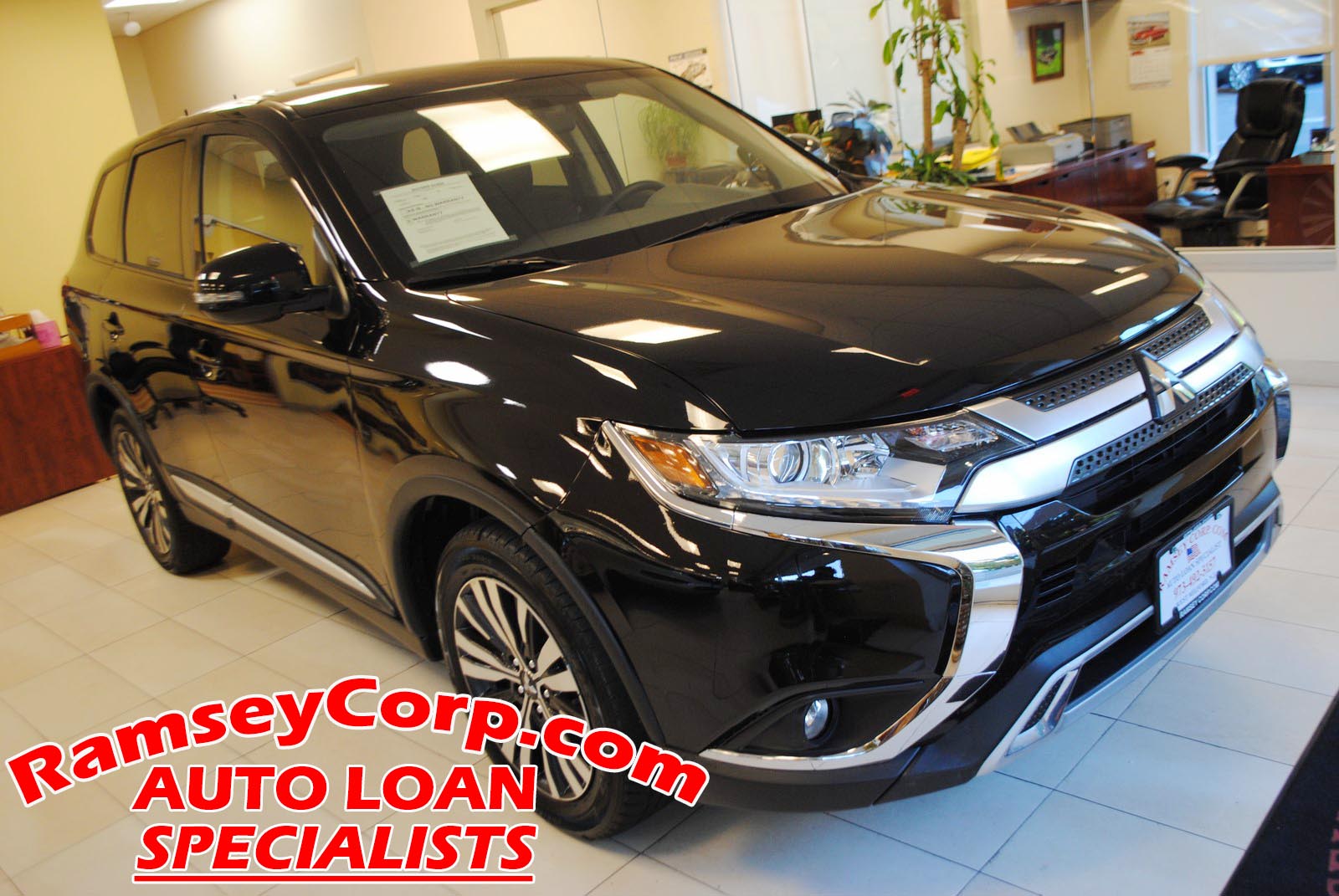


RAMSEY CORP IS HOME OF AUTO LOAN SPECIALIST ! THIS VEHICLE COMES WITH 48 MONTHS OR 29,191 MILES FACTORY DRIVE TRAIN WARRANTY; EXTENDED WARRANTIES AVAILABLE. FAMILY OWNED, NO COMMISSION SALES, NATIONWIDE SHIPPING RATES
Rear Parking Camera
3RD Row Seating
Xenon Headlamps
Heated Seating
ONE OWNER
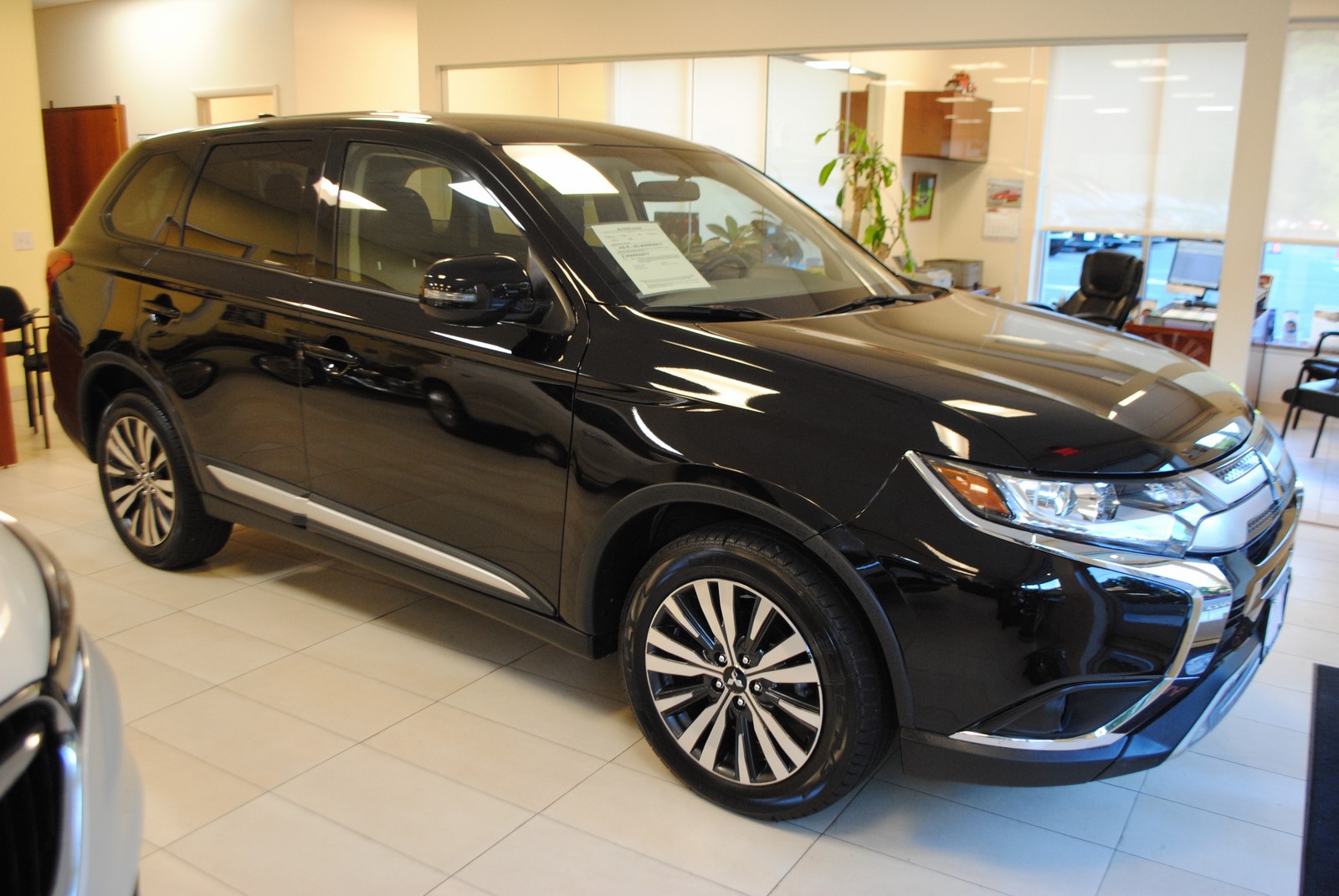
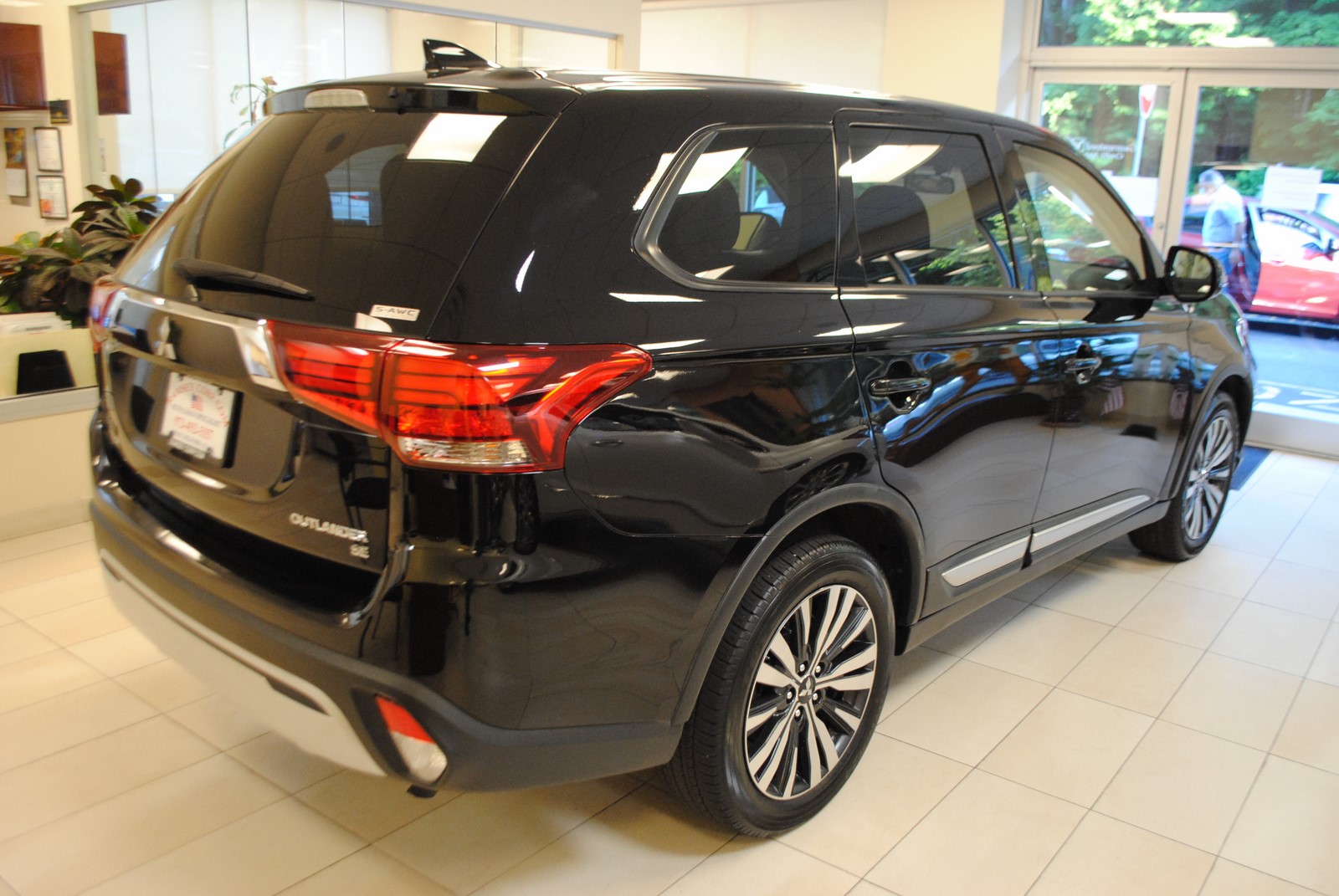
2019 MITSUBISHI OUTLANDER SE
JA4AZ3A38KZ043689
4 DOOR SPORT UTILITY
2.4L I4 F SOHC 16V
ALL WHEEL DRIVE

Versus the competition:Though the Outlander wins on price, it doesn’t win on much else — there are simply several better vehicles in its class.
It seems like the 2018 Mitsubishi Outlander would be right up my alley. I love a deal. When I go grocery shopping, if it’s not on sale, I don’t buy it even if I know I like it; the shirt I’m wearing as I write this is the result of stackable online coupons; my cell phone is on a family plan; I would rather walk five blocks (long ones) than pay for parking. Point is, I’m a man who loves saving money. And the Outlander is nearly the cheapest way you can get three rows of seats and space for seven people, with the exception of the Dodge Journey.
But after a week with the 2018 Outlander, I found my whole worldview changing. There are times when it doesn’t pay to skimp — and this seems to be one of them.
The Outlander competes against the 2018 Volkswagen Tiguan, 2019 Kia Sorento and the aforementioned 2018 Dodge Journey, all of which have third rows either standard or optional. Compare the Outlander with those vehicles here.
There’s also a plug-in hybrid electric version of the Outlander, which makes it unique among non-luxury SUVs. (No, Kia, the Niro isn’t an SUV, no matter what you say.) The plug-in Outlander has just two rows and five seats.
This review covers both the gas-only Outlander and the Outlander PHEV.
New for 2018
The gas-only Outlander comes in five trim levels: ES, SE, LE, SEL and GT (which I tested). Updates to the 2018 model are slight: ES models get a new 7-inch touchscreen as standard equipment, while the SEL’s standard feature list adds blind spot warning, rear cross-traffic alert and a power liftgate. The top-trim GT adds a 360-degree camera system and a heated steering wheel standard.
Two significant option packages have also been updated. The SEL Premium Package adds LED headlights and foglights, a multiview camera system and a heated steering wheel. The Touring Package, available on the SEL and GT only, puts a big emphasis on safety features, adding forward automatic emergency braking, lane departure warning, adaptive cruise control and automatic high beams. If you add the Touring Package to the SEL, it adds the contents of the SEL Premium Package, as well.
Essentially, if you want advanced safety features, you Mitsubishi decided you have to get an SEL or a GT, but even then the features aren’t standard. This blunts the Outlander’s value proposition given those features are offered on lower trim levels of some co
Powertrains and Performance
The Mitsubishi Outlander offers two engines apart from the plug-in hybrid. A 2.4-liter four-cylinder, found in all but the GT, makes 166 horsepower and 162 pounds-feet of torque, and it pairs with a continuously variable automatic transmission. The GT’s 3.0-liter V-6 makes 224 hp and 215 pounds-feet of torque, and it mates with a six-speed automatic and standard all-wheel drive. Lower trim levels have standard front-wheel drive and optional AWD; the base ES has a more basic AWD option called All-Wheel Control, while all other trim levels have Super All-Wheel Control available, which can move torque left and right and also integrates the SUV’s stability control, brakes and active yaw control.
Fuel economy varies based on powertrain. FWD models with the base engine get an EPA-estimated 25/30/27 mpg city/highway/combined; adding AWD drops each figure by 1 mpg. The GT, with its larger engine and AWD, gets 20/27/22 mpg and takes premium gas only; the base engine runs on regular.
The Outlander’s ride is harsh, especially on poor roads, without much payoff. It’s one thing to make a suspension stiffer so it holds up better in corners, but the Outlander manages to ride poorly while also leaning heavily when pushed. If I had to pick one word to describe the Outlander’s ride quality, it would be “busy.”
Acceleration from the V-6 was more than adequate, but the engine gets noisy when it revs up — and not in a fun, sporty-exhaust kind of way. Our editors who drove the hybrid for a week reported the same thing in that vehicle, so engine noise is going to be an issue, even though road and tire noise didn’t stand out as problems to me. Perhaps I couldn’t hear them over the engine.
How the Plug-In Hybrid Drives
The Mitsubishi Outlander PHEV is offered in SEL and GT trim levels with standard AWD. It combines a 117-hp, 2.0-liter four-cylinder gas engine with two electric motors, one on the front axle and one on the rear. According to EPA estimates, the 12-kilowatt-hour lithium-ion battery pack has enough juice to give the Outlander PHEV 22 miles of electric range up front, after which gas mileage is 25 mpg combined. The battery takes eight hours to charge on a 120-volt household outlet (with the supplied charging cable) or 3.5 hours with a 240-volt Level 2 charging station (sold separately). For out and about, the Outlander PHEV is also DC fast-charge-compatible, which pumps the battery up to 80 percent capacity in just 25 minutes.
Our editors in Chicago tested the PHEV model and echoed what I noticed about the gas model’s driving experience: an overall lack of refinement and lots of noise to go with adequate performance. The plug-in has good initial power off the line on electricity alone, but pressing the accelerator more than halfway kicks on the gas engine.
The PHEV has a few driving modes not found on the regular version, including a Battery Charge mode that keeps the gas engine running all the time to pump some extra juice back into the battery. We found that this mode doesn’t affect performance too much, and it doesn’t feel as if the engine over-revs in normal driving. In a non-scientific measure, we drove around a neighborhood for about 20 minutes and managed to add a few miles of range back into the battery. The best use of this mode would be during higher-speed driving, where you could preserve or bolster the electric charge for later use in lower-speed stop-and-go conditions when electric driving is most efficient.
Interior
The Mitsubishi Outlander’s interior is by turns adequate and disappointing. The design and layout made me feel like I was climbing into a car from five years ago rather than something modern. This probably wouldn’t have bothered me so much in a more affordable trim, but this was a loaded GT that stickered for $34,360 (including destination charges).
Looking at the features list, the Outlander has a few things going for it. Dual-zone automatic climate control is standard on all trim levels, and all versions except the base ES come with Android Auto and Apple CarPlay compatibility. SEL and GT models even add real leather upholstery. On paper, the Outlander seems to match up well with the competition in terms of what you get for the price.
But the more I poked around, the more I found to frustrate me and my passengers. There were two USB ports and a 12-volt outlet up front, but nothing in the second or third rows for passengers back there to charge devices. There’s another 12-volt outlet that’s accessible from the cargo area. The seats across all three rows are stiff and flat, like sitting on a church pew with minimal cushioning. It’s nice that there’s easy access to the third row from both sides, but there’s no room back there for adults to sit, or even bigger kids; it needs more legroom and headroom. There also aren’t any visible air vents in the second or third rows, so air circulation could be a problem.
The third row won’t fold down unless you remove the gigantic head restraints, which don’t store neatly anywhere. There’s a storage bin in the floor behind the third row, but it’s tiny — too shallow for even a backpack or a large purse. Behind the third row is only 10.3 cubic feet of cargo room, which expands to 34.2 cubic feet with the third row folded. The PHEV has 30.4 cubic feet of cargo room behind its second row.
Value at What Cost?
The base price for a FWD Outlander ES is $24,995, but the better value is the SE, which comes in at $25,995 but with a better multimedia system (including Android Auto and Apple CarPlay), heated front seats, push-button start, an easy entry system and satellite radio. The LE is up next, at $27,195, followed by the SEL at the same price. The LE is a Limited Edition model that gets a few cosmetic enhancements, while the SEL has a few extra features including an auto-dimming rearview mirror, power liftgate and leather upholstery. At the top of the lineup is the GT, which gets the larger engine and standard AWD for $33,295. Adding that basic AWD system to the ES costs $1,500, but the more advanced system adds $2,000 to the cost of an SE, LE or SEL.
This puts the Mitsubishi Outlander’s pricing more in step with compact SUVs than mid-size ones, which is how it derives much of its appeal. If you want to carry the most people for the fewest dollars, the Outlander has you covered. But the third row is not usable for adults, and a lack of family-friendly options in the second and third rows is frustrating.
The Mitsubishi Outlander’s value comes at the cost of refinement and comfort, which would be hard for me to stomach on a regular basis. This is one bargain I would avoid.