


Xenon Headlamps
Rear Parking Camera
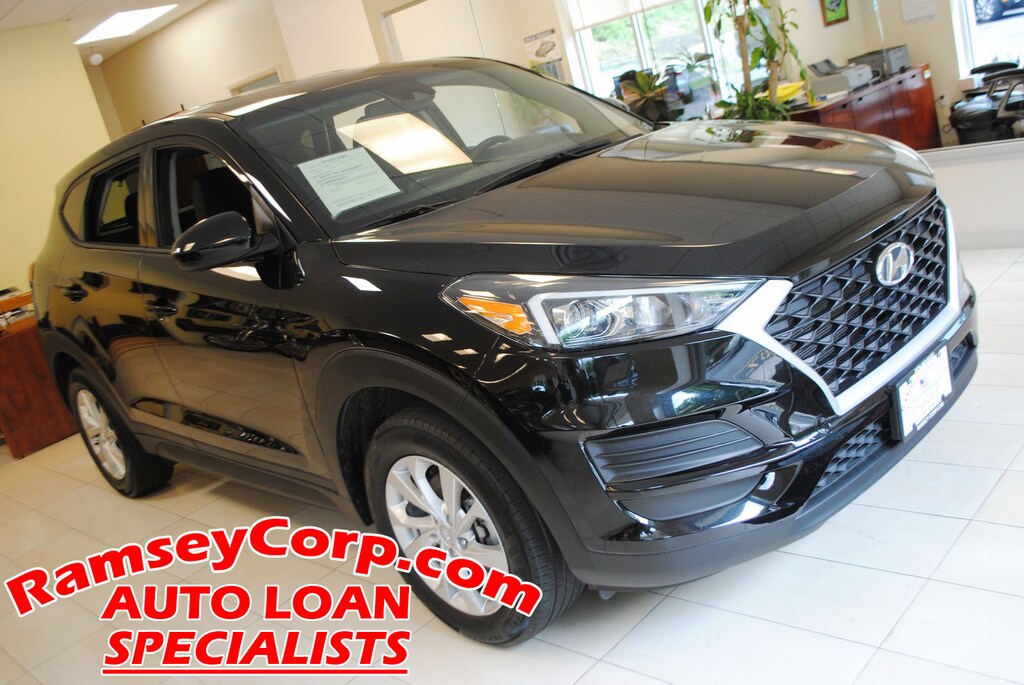
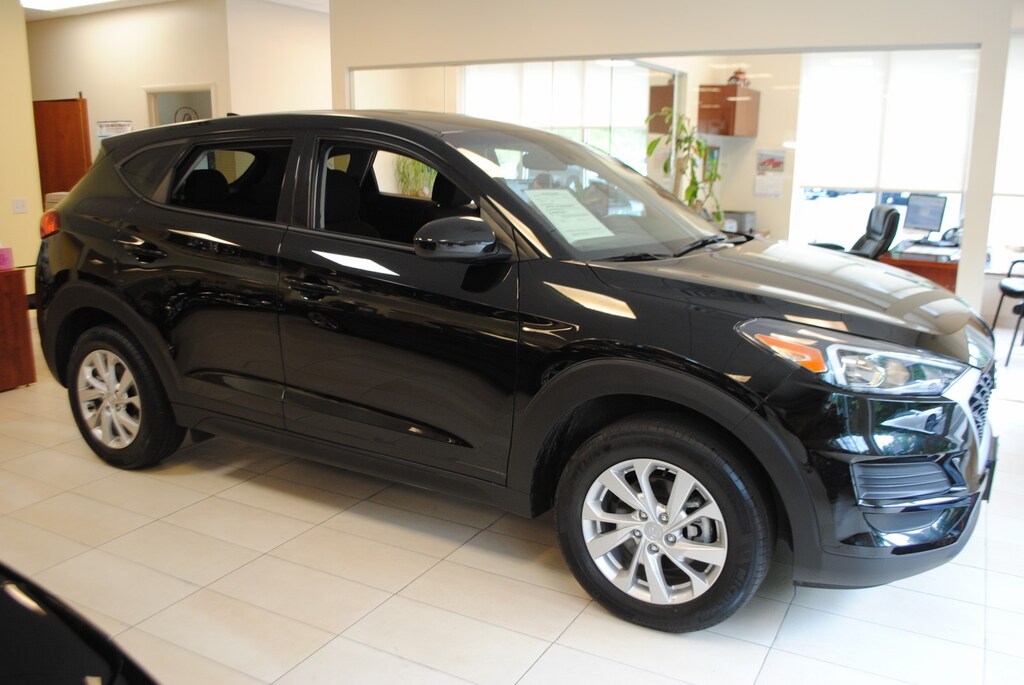
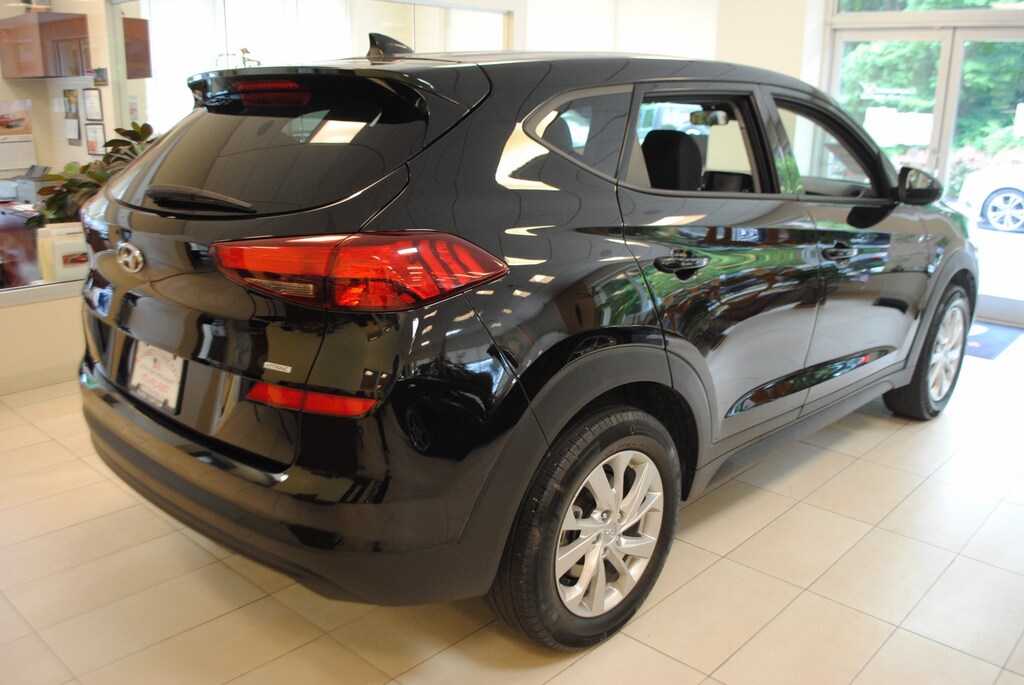
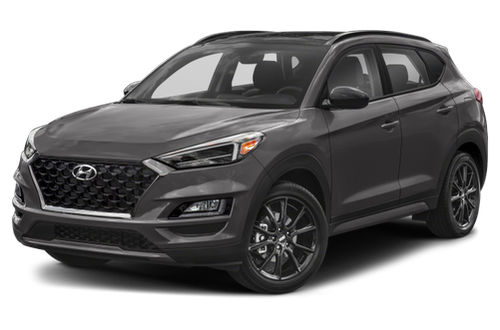
2019 HYUNDAI TUCSON SE
KM8J2CA43KU885707
4 DOOR SPORT UTILITY
2.0L I4 F DOHC 16V
ALL WHEEL DRIVE
The verdict:
The Hyundai Tucson's not a star in any one area, but it's solid all around, with improved value and a new, smoother powertrain for 2019.
Versus the competition:
The Tucson compact SUV is very competitive in price and features, but with its tidier size it might appeal most to shoppers who value maneuverability and parking ease more than cargo space.
The competition among mainstream compact SUVs has only gotten hotter since the current Hyundai Tucson made its debut for 2016. For 2019, the Tucson gets a mid-cycle freshening that helps it keep pace with redesigned or revised competitors, including such sales leaders as the Honda CR-V, Toyota RAV4 and Nissan Rogue. (Compare them here.)
Styling tweaks give the Tucson’s look a modest update, but the more significant changes include a revised powertrain lineup, tech upgrades and additional safety and driver assistance systems available across more trim levels. These changes make the 2019 more attractive and add value to a car that already boasts Hyundai’s long warranty. Trim levels are slightly juggled, now including a base SE and a repackaged and repositioned Value, plus the SEL, Sport, Limited, Night and Ultimate. The SEL Plus has been dropped. And the Night is new, offering a second, more upscale sporty model with blacked-out trim and bigger wheels that slots between the Limited and Utimate in features and price.
Styling Dialed Back a Notch
The most obvious styling change is a version of Hyundai’s signature “cascading grille,” a larger mouth that brings the Tucson more in line with the look of other new Hyundais. Along with the grille comes a higher hood lip and a new bumper that make the front end look bulkier. The headlights look less stretched and now have boomerang-shaped accent lights, replacing the distinctive long slashes. The rear gets reshaped taillights and a new bumper. Available 17-, 18- and 19-inch wheels are also new; the top trims get 18s rather than 19s, which are saved for the more aggressive-looking Sport and Night.
The effect is a 2019 Tucson that’s softer and less bold than the one that debuted for 2016. It’s not like the 2015 Hyundai Sonata’s transformation from swoopy to staid, but the Tucson’s attitude quotient has been dialed back. On the styling Richter scale, the Tucson is mid-pack, with neither the high style of a 2019 Mazda CX-5 nor the aggressiveness of a redone Toyota RAV4.
No More Turbo
The base engine for the SE and Value trims has not changed: it’s a 161-horsepower, 2.0-liter four-cylinder mated to a six-speed automatic transmission. While compact SUVs increasingly feature downsized turbocharged engines, the Tucson steps back by dropping the old version’s optional 175-hp, turbocharged 1.6-liter and seven-speed dual-clutch automatic transmission, instead giving SEL and higher trims a conventional 181-hp, 2.4-liter four-cylinder and six-speed automatic. This powertrain first appeared in the 2018 Tucson Sport.
The new engine has a bit more horsepower but less torque — and it kicks in later: the old 1.6-liter produced 195 pounds-feet of torque starting at 1,500 rpm, while the 2.4-liter peaks at 175 pounds-feet when wound up to 4,000 rpm. While I’d never argue for less power, the new powertrain is a much better fit for the Tucson. It gives up a little pep off the line but shifts notably more smoothly around town, and mid-range acceleration for on-ramps or highway passing is adequate.
The six-speed automatic might seem an anachronism in a world of mileage-chasing eight- to 10-speed transmissions and continuously variable automatics, but the wider gear steps are a good companion for the 2.4-liter. It downshifts willingly to tap into more power, with only slight hesitation. I never caught it searching for the right gear or upshifting at the wrong time in a turn, as some of the more exotic gearboxes do. The 1.6-liter turbo had a jerkier personality on startup, and the dual-clutch automatic could be hard-shifting and balky. My only complaints about the 2.4-liter is that it exhibits some diesel-like clatter and its automatic stop-start system is a little rough (though you can turn it off).
Handling feels competent and in control, though not sporty, and the steering has more weight — in a good way — than many Hyundais. The suspension is firmer and more European than some rivals, but the ride is very comfortable, competently handling rough city streets. The ride in the top trims seems more refined than in the 2018, possibly due to the switch to 18-inch wheels from the old Tucson’s 19s and their less compliant tires.
Gas mileage ratings for 2019 are unfortunately also anachronistic in an era when we expect increases with each model change. The 2018 Tucson was no leader as it was, and the 2019 moves in the wrong direction, with a 2 mpg decline in combined EPA estimates for the 2.4-liter versus the retired 1.6-liter. The 2019 is rated 22/28/25 mpg city/highway/combined with front-wheel drive and 21/26/23 with all-wheel drive. Compare it with the 2018 here. That’s far behind leaders like the CR-V and Nissan Rogue, whose front-wheel-drive models rate up to 28/34/30 and 26/33/29 mpg, respectively. The Tucson’s base engine is unchanged, with combined ratings of 26 (FWD) and 23 (AWD).
Interior and Tech Upgraded
The interior looks familiar, with the fanciest trims still more tasteful than opulent. The big panoramic moonroof option adds airiness, and the dashboard is fully redone, with new designs for the instrument cluster, center multimedia display and controls. A 7-inch touchscreen with Android Auto and Apple CarPlay integration is standard on all but the Ultimate, which gets an 8-inch screen with navigation. The display now stands up, tablet-style, on the dash, which puts it in a better line of sight and brings it closer for the driver to hit not just the touchscreen, but also the volume and tuning knobs and the shortcut buttons that flank the screen. With the redone climate controls sitting below new air vents, the center of the dash looks cleaner and less busy. A swath of soft wrap with stitching adds a premium touch.
The 2019 Tucson switches to a standard electronic parking brake on the console. There’s a new front seat design for interiors with leather upholstery (Limited and Ultimate) that’s more supportive and comfortable on long drives. YES Essentials cloth seats are standard on other trim levels; it’s a fabric Hyundai says repels odors as well as stains.
Newly available tech includes wireless phone charging, which another Cars.com editor noted worked well even with his bulky phone case, unlike in some other vehicles. Higher trims of the 2019 also get a USB outlet for the backseat, though I still wish for another one up front to go with the solo USB media port and a pair of 12-volt outlets. The Value trim level and above get three years of free Hyundai Blue Link connectivity services, including remote start, remote lock/unlock, roadside help and stolen vehicle recovery.
New upscale options include a heated steering wheel and 360-degree camera system that was much appreciated in the city, though the image could be larger and sharper.
Reclining adjustments help create a backseat with comfortable room for tall adults, though the cushioning is a little stiff for my taste and the bottom cushion is a hair short for longer trips. The Ultimate adds heated outboard seats.
There are a few interior details, however, that Hyundai could add to make higher trim levels feel more competitive with top versions of some rivals. One would be paying more attention to soft-touch surfaces. That includes not just in places you touch — where there’s still too much hard plastic — but also details like soft bottoms in some of the cubbies to eliminate small-item rattling and sliding. Another thing would be a modern configurable instrument cluster display like the one in the CR-V. A Wi-Fi hot spot would be nice, too.
Average Storage and Cargo Space
The Tucson has average cabin storage for a family SUV, including a medium-sized covered bin in the center console, a large-device cubby under the dash (with power ports, USB input and optional wireless charging), a smaller cubby in front of the center cupholders, smallish door bins with space for bottles, and a slim-item cubby on the front passenger side of the center console that was just right for my iPad Mini.
Cargo space is where the Tucson shows its smaller footprint; it’s about 4 to 8 inches shorter than most rivals. The Tucson has 31.0 cubic feet behind the backseat and 61.9 cubic feet with the 60/40-split, folding backrests down. The space doesn’t seem small, though, and it proved adequate for several carry-on bags with the seats raised; folded, there was room for me to help a friend move. But it does come up shy of compact SUV haulers like the CR-V, which has 39.2 cubic feet with the seats up and 75.8 with them down, and the Rogue, which has 39.3/70.0 cubic feet.
A two-level cargo floor can be raised to the higher position to make a flatter full-length load floor when the backseat is folded, which also leaves space to store the cargo cover out of sight. It can also be lowered about 2 inches to make space for taller or bulkier items. Optional is an excellent hands-free power liftgate; just stand next to it with the key fob in your pocket or purse and it gives three warning beeps then opens wide. It’s more convenient than rival systems that need no hands but do require you to wave your foot under the bumper.
Safety and Driver-Assistance Tech Upgraded
The 2019 Tucson is an IIHS Top Safety Pick, earning top scores for crashworthiness and a superior score for the front collision system. But it missed out on the higher Top Safety Pick Plus designation due to low scores for its headlights; the LED headlights on Sport and higher trims are rated only acceptable, and the base system is rated poor. Only two models in the institute’s small SUV class, the Hyundai Kona and Mazda CX-5, earned a good headlight rating.
For 2019, all Tucson trims get a standard front collision system with automatic braking and lane-keeping assist, features previously available only for an extra cost on the top trim. The second-level Value trim adds standard blind spot warning and rear cross-traffic alert. This helps the Tucson keep up with rivals, though the 2019 Rogue and RAV4 still have more full-featured standard safety tech packages. The 2019 CR-V, however, still doesn’t offer such tech on its base model.
The Tucson also has new-for-2019 advanced safety tech options, including adaptive cruise control with stop-and-go capability, driver attention alert and automatic high beams. See a full list of safety features here.
The 2019 Tucson has not yet undergone a Cars.com Car Seat Check, but the previous version scored well and little of substance that would affect child seats has changed.
Value Still Appeals
The 2019 Tucson starts at a competitive $24,245 — $715 higher than 2018, but with added standard safety technology. But the highlight of the Tucson’s features-for-the-dollar equation — and worth its higher price — is the mid-range SEL, which starts at $26,645 (all prices include a destination fee) with FWD. It adds upscale exterior details, features like dual-zone automatic climate control, a second USB port in back and safety tech. Plus it adds the more satisfying 2.4-liter powertrain. Compare all Tucson trim levels here.
The value equation versus rivals extends to the fully loaded Ultimate, which is $33,995 with all-wheel drive. That undercuts similarly equipped AWD compact SUVs like the top CR-V Touring at $35,195, a 2019 RAV4 Limited with the top tech package at $38,815, and a Nissan Rogue SL with the Premium Package at $34,560. The Tucson also adds peace of mind thanks to Hyundai’s warranty, which provides five years/60,000 miles of vehicle coverage and 10 years/100,000 miles of powertrain coverage.
The Tucson may not be a star in any one area, but it’s a solid compact SUV all-around. One trade-off is that it’s also a bit smaller than most, so it might appeal most to shoppers who value parking ease and maneuverability over maximum hauling capacity.