
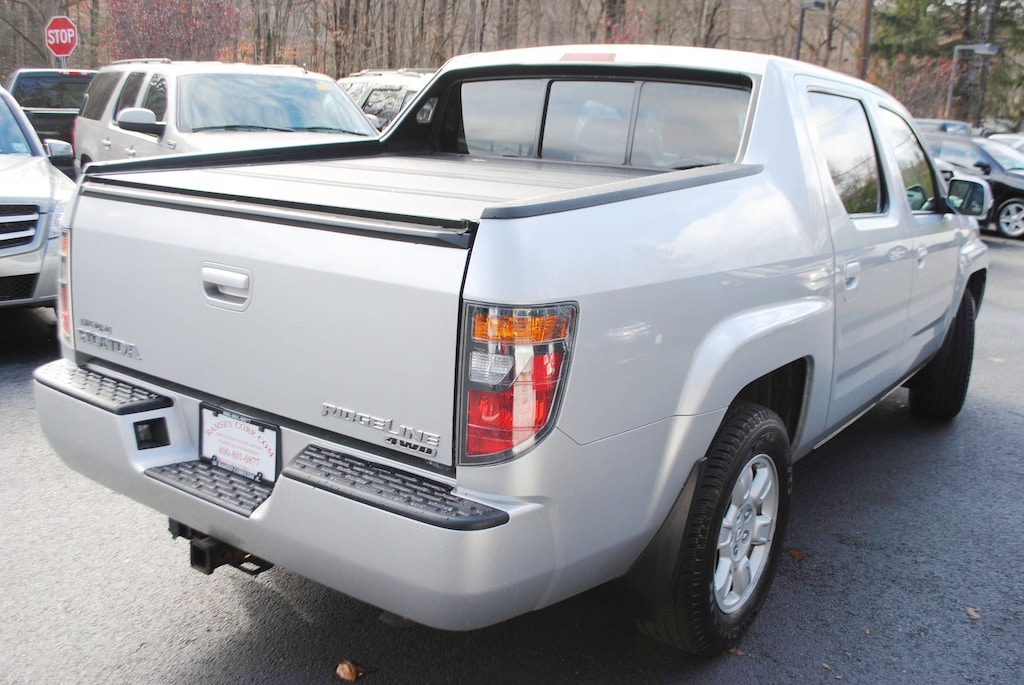


Tow Hitch
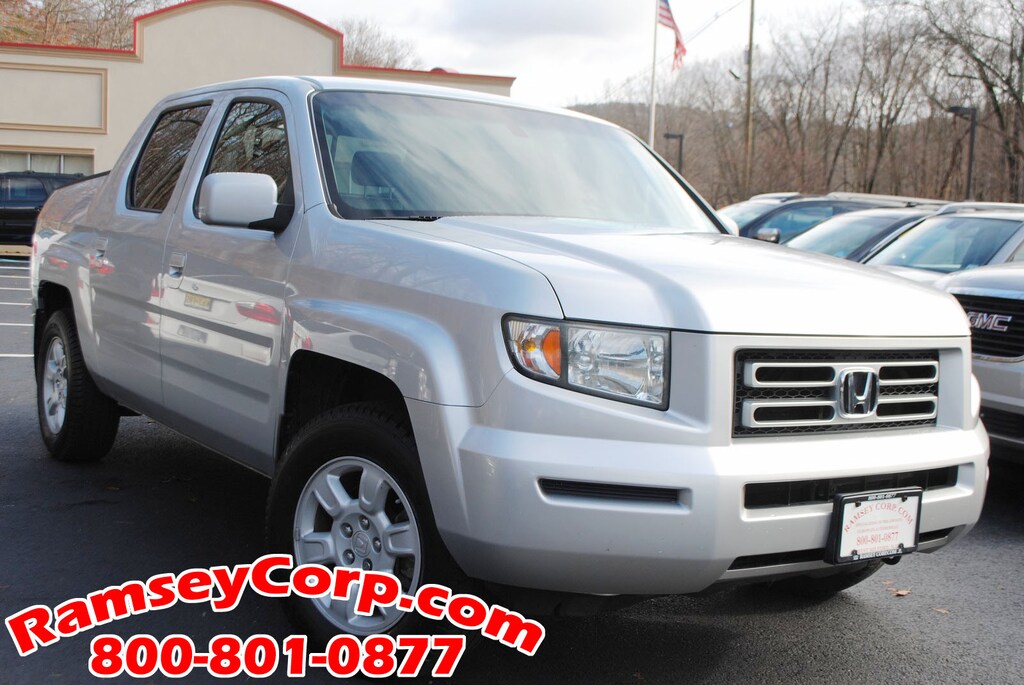
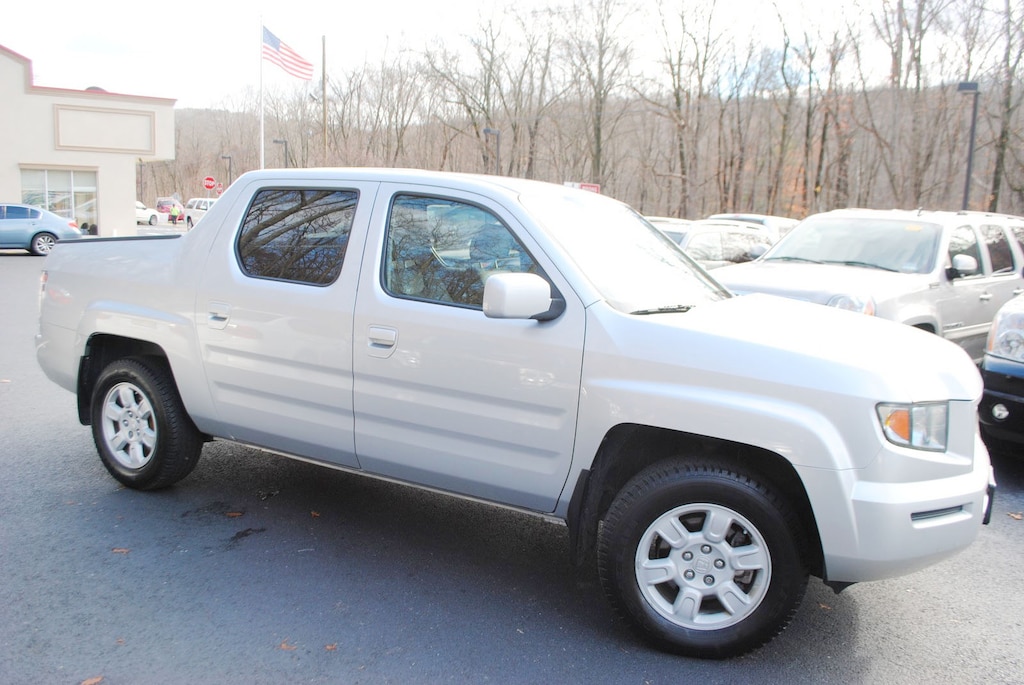
2006 HONDA RIDGELINE RTS
2HJYK16486H558840
CREW PICKUP 3.5L V6 MPI SOHC
4 WHEEL DRIVE
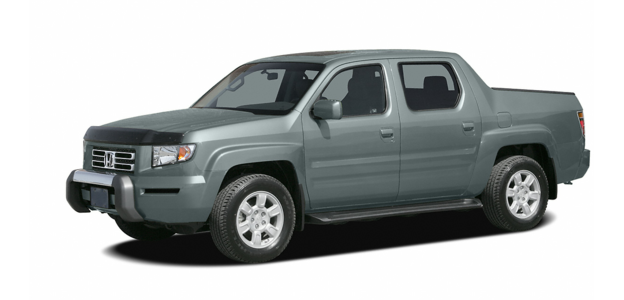
The Ridgeline disproves the conjecture that Honda's first pickup truck would be little more than a Pilot sport utility vehicle notched and fitted with a cargo bed. It starts with a similar unibody structure but is reinforced with a ladder-style steel undercarriage akin to the frame of a body-on-frametruck. The result is a space-efficient vehicle that's free of the body twist common to pickups yet is capable of doing real work. By Honda's estimation, only about 31 percent of the Ridgeline's components are shared.
Whether it was by gut instinct or careful study into pickup truck owners and their habits, the Ridgeline's North American developers arrived at what is arguably the best execution of a pickup for an important type of buyer — those who have adopted the rural American workhorse as the latest alternative people mover. If you're one of the folks who has cried that most people don't need SUVs, you're sure to be offended by this latest trend. I might agree. But it's my job to evaluate the vehicle on its own merits, and that's what I'll do.
I tested a Ridgeline RTL, the top trim level. The base is called the RT, followed by the RTS.
Exterior & Styling
The fact that some people hate the way the Ridgeline looks is very good news for Honda. Why? Because others really like it, and a J.D. Power and Associates study published last year revealed that polarizing car styling sells better overall than do designs that elicit no strong reaction in either direction. What I like about the Ridgeline is that it looks like one solid piece when viewed from the side. There's no gap between the cab and the box, which is universal among other pickup trucks. One exception is the Chevrolet Avalanche, to which the Ridgeline is often compared. The sail-shaped member behind the cab does indeed resemble the Avalanche's gusset.
The Ridgeline's only exterior variances are between the RT and the two higher trim levels. The RT has black bumpers, side mirrors and door handles where the others' are body colored. It also has steel wheels with wheel covers; the RTL and RTS have alloy wheels. Both types are 17 inches.
Honda considers the Ridgeline a midsize pickup, in a class with the Dodge Dakota, Nissan Frontier and Toyota Tacoma. The table below compares some of the key dimensions to those of a domestic and Japanese competitor.
| Midsize Pickups Compared | |||||||||||||||||||||||||||||||||||||||
|---|---|---|---|---|---|---|---|---|---|---|---|---|---|---|---|---|---|---|---|---|---|---|---|---|---|---|---|---|---|---|---|---|---|---|---|---|---|---|---|
| Dodge Dakota Quad Cab 4x4 | Honda Ridgeline | Toyota Tacoma Double Cab 4x4 | |||||||||||||||||||||||||||||||||||||
| Length (in.) | 218.8 | 206.8 | 208.1 | ||||||||||||||||||||||||||||||||||||
| Width (in.) | 71.7 | 77.8 | 74.6 | ||||||||||||||||||||||||||||||||||||
| Height (in.) | 68.6 | 70.3 | 70.1 | ||||||||||||||||||||||||||||||||||||
| Steering Diameter (ft.) | 44.0 | 42.6 | 40.7 | ||||||||||||||||||||||||||||||||||||
| Ground Clearance (in.) | 8.0 | 8.2 | 9.4 | ||||||||||||||||||||||||||||||||||||
| Towing Capacity (std./max., lbs.)* | 4,300/6,850 | 5,000/5,000 | 3,500/6,500 | ||||||||||||||||||||||||||||||||||||
| Maximum Payload (lbs.) | 1,460 | 1,549 | 1,415 | ||||||||||||||||||||||||||||||||||||
| Cargo Bed Length (ft.) | 5.3 | 5.0 | 5.0 | ||||||||||||||||||||||||||||||||||||
| Bed Width at Tailgate (ft.) | 5.0 | 4.4 | 4.4 | ||||||||||||||||||||||||||||||||||||
| Bed Width Between Wheel Wells (ft.) | 3.75 | 4.2 | 3.6 | ||||||||||||||||||||||||||||||||||||
| *Irrespective of price; figures are for the model line; maximum may require optional equipment Manufacturer data | |||||||||||||||||||||||||||||||||||||||
Ride & Handling
What motorists are now learning is that car-based SUVs are in many ways superior to truck-based types, especially in the areas of ride and handling. The reasons are simple: One is that car-based trucks feature four-wheel-independent suspension where the truck-based variety usually has a solid rear axle, which compromises both ride and handling. This type of suspension, and the ground clearance considered necessary in a work truck, also tend to raise the vehicle's center of gravity and its rollover propensity. Finally, body-on-frame trucks may be strong, but they're typically not rigid. They shudder and twist. Aside from inducing squeaks and rattles and generally lowering one's perception of the vehicle's quality, this flexing makes the suspension components wonder where the heck they are and to give up on the task of holding the wheels to the road.
Now, start with a rigid unibody, graft a steel frame to it, add independent rear suspension components that are always in roughly the same place relative to each other and the front corners, and you have a recipe for carlike handling. That's the theory, at least. Honda says the Ridgeline has better lateral grip in turns than does the Honda Accord coupe. That actually sounds like an indictment of the Accord, but I can say from experience that the Ridgeline's roadholding is nothing short of remarkable. The rack-and-pinion steering provides confidence-inspiring precision.
In case things get out of hand, the electronic stability system should keep you on course.
The ride quality is simply good. The Ridgeline is like most of the car-based SUVs, which have replaced the uncontrolled, bouncy truck ride with a more controlled yet firm ride. If my butt hasn't been thrown out of calibration by the recent addition of a Krispy Kreme doughnut shop to the lobby of cars.com's headquarters, the Avalanche actually has a softer ride.
Going & Stopping
On my practical scale of vehicle power — which includes the designations quick, quick enough and not quick enough — the Ridgeline definitely rates as quick enough, charging into traffic without a care. The engine gets revving rapidly under full throttle, but without the fury of some of the domestic trucks' roaring crankshaft-driven cooling fans. Basically the same high-output 3.5-liter V-6 employed in the Pilot and the Odyssey minivan, the engine delivers very even torque across the operating range. It produces 255 horsepower at 5,750 rpm and 252 pounds-feet of torque at 4,500 rpm, but Honda says 90 percent of this peak torque is on tap from 2,500 to 5,500 rpm.
Honda's use of a V-6 engine in the Ridgeline isn't notable, but the lack of rear-wheel drive is unique for a pickup truck. To be precise, it's a standardall-wheel-drive system, called Variable Torque Management 4WD (VTM-4), but it's based on a front-wheel-drive architecture with the engine mounted crosswise. While cruising, the system sends 100 percent of the torque to the front wheels. An electronically controlled multiplate wet-clutch pack in the rear differential serves as the center differential, apportioning power between the front and rear axles as needed. Honda says VTM-4 anticipates slippage and automatically sends between 10 percent and 40 percent of the torque to the rear axle upon launch, and up to 70 percent when reacting to slippage at the front wheels. The stability system serves to transfer torque left and right as well.
There's also a VTM-4 Lock button on the dashboard that holds the torque split for the slipperiest conditions. This is available only with the transmission in 1st, 2nd or Reverse, and the rearward torque allocation decreases as speed increases, to prevent driveline damage. At 18 mph, all power reverts to the front axle. To be clear, the Ridgeline is designed for medium-duty offroad use. Though it has standard skid plates, it lacks the additional low gear and heavy-duty construction required for serious off-roading.
The five-speed-automatic transmission behaves exactly as desired and includes a tow/haul mode, activated by pushing a button at the end of the column-mounted gear selector. This causes the transmission to rev higher before upshifting. Resulting is the power needed to tow a trailer without causing the transmission to upshift and downshift too frequently, which would lead to overheating.
The Ridgeline's EPA-estimated fuel economy is 16 mpg in city driving and 21 mpg on the highway. For comparison, the 2005 Toyota Tacoma's four-cylinder engine gives it a 19/23 mpg rating and the optional V-6 is rated 16/20 mpg with a manual transmission and 17/21 mpg with an automatic. (The Ridgeline offers neither a manual nor a four-cylinder.)
The standard brakes are four-wheel discs with ABS and brake assist. Theelectronic brake-force distribution is particularly valuable in a pickup, where the load over the rear wheels can vary dramatically. I found the braking to be very good in all situations.
The Inside
The unibody construction seems to give the Ridgeline a respectable ground clearance of 8.2 inches yet a reasonably low cab floor for ease of ingress and egress. The RT and RTS trim levels come with cloth upholstery, though the RTS has higher-quality, textured inserts. The RTL features leather. The RT's driver's seat is manual but it includes a cushion-height adjustment. The RTS and RTL do the same with power. This is an important adjustment because it allows drivers of different sizes to optimize their vantage point. I'm disappointed, though, that the pedals aren't adjustable and the steering wheel doesn't telescope. Either feature would help drivers distance themselves properly from the airbag.
The Ridgeline's high hood actually creates some blind spots in front — perhaps not a hazard on the road, but definitely an added challenge when parking. As in the Avalanche, the high cargo box creates blind spots, seemingly higher ones than in most pickups. A rearview camera or front and rear sonar-based park assist would be well worth having.
The interior ergonomics are mostly good. The gear selector is the old column-mounted style. This is good because it leaves the floor open for legs and storage provisions. It's bad because it displaces a dedicated windshield-wiper stalk. So the wiper controls are on the turn-signal stalk where most modern cars have their headlight switch. The headlight switch is a rotary knob on the dash in front of the driver's left knee — again, old school. If this is your only vehicle, you'll get accustomed, but if you usually drive cars, you're likely to wipe the window every time it gets dark out. (Of course, I didn't do this ... don't be silly.)
The storage provisions are pretty good. The large center armrest/storage console has multiple levels, including a deep bottom one. This module extends forward, increasing the interior volume. Pretty neat stuff, and it's supplemented by a large locking glove box and a few bins in the dashboard's center control panel. I'm surprised there are no bottle holders in the door pockets, however. Also, the driver's sun visor lacks a vanity mirror; Honda says it's because the likely buyer is male, and men prefer to stuff papers and the like up there, with which the mirror interferes.
The interior's materials quality is generally good, though the faux metal trim is easily marred. The standard rubber floormats are great for snowy climates or any owner who puts the truck to real use. It's seldom recognized that noise levels affect one's perception of quality, and the Ridgeline has an admirably quiet cab.
Overall, the front seats are pretty comfortable. The middle trim level adds a manual lumbar adjustment, and the RTL ups the ante to a powered one. Both have bun warmers, standard. The front seat headroom is decent; the legroom is workable, but the floor seems high relative to the seat, which raises my knees more than I like.
The backseat also seems to make a few compromises. Its seat cushion is a bit short, back to front. It's also a bit firm for my taste, but sometimes seats soften as they break in. The backrest angle is comfortable, though, as is the center armrest. When raised, the armrest's width makes the center seating position more comfortable than average. The flat floor also helps in this regard. Again, the floor is relatively high overall, which raised my knees but allowed them to clear the front seat's backrest.
Safety
The Ridgeline hasn't been crash tested as of this writing, so I'll simply detail the safety features. The aforementioned ABS and stability system are important active-safety features. The front airbags include a passenger's occupant-classification system that varies the airbag's deployment intensity based on the occupant's size and position. There are also side-impact airbags in the front-seat backrests intended to protect the occupants' torsos, and side curtain-type airbags that deploy along the side windows to protect against head injuries in a side impact. A rollover sensor will deploy the curtains on both sides to prevent occupant ejection.
The backseat is more than large enough to accommodate child-safety seats, so this is where they should go. Honda includes three pairs ofLATCH anchors, which is surprisingly rare, so whether you're using a newer LATCH-compatible seat or an older, belt-secured type, the center position is the safest for a child.
Honda has long emphasized crash compatibility, so the Ridgeline's bumpers have structural members that extend down to prevent the truck from overriding a lower vehicle in a collision.
Cargo & Towing
Once you look at the Ridgeline's cargo and towing capabilities and innovations, it's pretty clear that Honda "gets" the target market (at least the newer segment thereof) in ways the domestic automakers don't. In short, the truck has just enough capability to satisfy the majority of buyers, along with some tricks to address the way regular people use — or would like to use — their personal transportation.
Taking a cue from the Element SUV, the Ridgeline's cab accommodates a bicycle — upright and with both wheels attached — when the 60/40-split backseat cushions are raised.
Around back is where things get more interesting. For one thing, the tailgate lowers like any other, but one can instead reach under the gate's lower-right-hand side, above the bumper, and pull a release handle to swing the gate off to the left side. Having hinges on the side in addition to the bottom made me question the gate's sturdiness, but Honda says the lowered liftgate is actually stronger than those of its competitors.
Why would you want a swing gate as well? It lets you get much closer to the cargo bed and the trunk. Wha? Yes, this pickup has a trunk. Roughly the rear half of the floor raises to reveal a deep bin large enough for a full-size cooler, golf club bags or what have you, up to 300 pounds. This is no minor innovation. Without adding a bed cover, owners get a large volume of lockable, out-of-sight storage — a provision that's sorely lacking in other pickup trucks. "Waterproof" is a promise that's hard to keep, so Honda calls the trunk water resistant. I sprayed water in the bed and drove around, and the trunk stayed bone dry.
It also bears noting that the bed surface is a steel-reinforced composite plastic, so there's no concern about scratches or rust. There are motorcycle wheel indents to help position bikes for transport. I suppose you lose access to the trunk if you haul something in the bed, but let's remember that the other guys don't have a trunk at all. Advantage: Honda.
The bed is 5 feet long and just more than 4 feet wide. It's an efficient 4 feet because the rear wheel housings are practically nonexistent, and the box sides are only slightly farther apart. When lowered, the 18-inch-high tailgate, plus gap, adds about 20 inches in bed length. Honda says this is long enough to haul 4-by-8-foot sheets of building material. Whenever possible, I try to use vehicles the way owners might and test manufacturer claims. So I headed out to the home store to pick up some drywall sheets. They fit exactly as advertised, with less than 2 feet of overhang. The choice of six cleats, rated to 350 pounds each, made tie-down a simple task.
I figured that the overhanging drywall, though more brittle than plywood or pressboard, would survive the trip. It did. I shot some photos, reflected on the experience and reached two conclusions:
First, though the Ridgeline is a capable and more fuel-conscious pickup than some, I recognized that, for me, it would be tough to justify driving (and parking and fueling) a pickup truck all year 'round for a once- or twice-yearly trip to the home store, or — perish the thought — for the sake of image. U-Haul rents full-size pickups or cargo vans for in-town use for about $25 per day plus mileage in most areas of the country.
And second, it was at this moment that I realized I don't actually need any drywall.
How the Ridgeline fares against the competition depends on what you consider the competition. Comparisons to the Avalanche are natural because there are some styling similarities, but the Avalanche is a full-size truck and its midgate allows the cargo bed to extend into the cabin, fully containing 8-foot stock with the tailgate raised. Honda looked into the idea but determined the sacrifice in structural rigidity wasn't worth the payoff. So the Ridgeline is really just a crew-cab pickup, arguably midsize. Honda says its main competition is the Toyota Tacoma Double Cab.
According to the respective manufacturers, the Ridgeline's maximum towing capacity is 5,000 pounds and the Tacoma Double Cab 4x4's is 3,500 pounds standard and up to 6,500 pounds with an optional tow prep package. The Ridgeline's optional tow package includes a Class III hitch receiver, but the truck already has supplemental cooling systems for the transmission and power steering fluid, is pre-wired for 4- and 7-pin harnesses, and includes the tow/haul mode mentioned above.
The Ridgeline's payload is a maximum of 1,549, compared to the Tacoma's 1,415. (My RTL with navigation tops out at 1,480 pounds.) Bear in mind that trucks can't accommodate their maximum payload and towing capacities simultaneously. Also, occupants factor into the totals. My Ridgeline's tire-and-loading placard cited the 1,480 pounds as occupants and cargo combined.
For comparison, the Avalanche's towing capacity extends north of 7,000 pounds.
Features
I've addressed most of the Ridgeline's notable features in the other sections, and all of them are detailed in the standard and optional features pages (click the buttons at the upper left of this page), but I'll mention a few more significant ones: Standard on all trim levels are remote keyless entry and a power sliding rear window. Factory options are very few, limited to a power moonroof and heated side mirrors on the RTL trim level. Dealer-installable options include the towing package, roof rails and, on the RTL only, a drop-down DVD video system.
For some reason, Honda treats the RTL with a moonroof and XM Satellite Radio as a separate trim level. Ditto if you add the GPS-based navigation system. Based on the list prices, the moonroof and XM add $1,150, and the nav system adds another $2,000 (you can't get navigation without the others).
The Ridgeline offers what I consider the most ergonomic and arguably the best navigation system available. It happens to come with an auxiliary jack that will come to be known as an MP3 input. In reality, you could attach a MiniDisc player, cassette player, laptop computer or any other device that outputs analog audio and thus can connect to a stereo mini jack in the Ridgeline's dashboard. It's a shame this isn't standard on all Ridgelines.
The stereo in question, which is standard on the two higher trim levels, is a 160-watt system with an in-dash six-CD changer and a subwoofer. The RT has 100 watts, a single-CD player and no subwoofer.
Ridgeline in the Market
The most common question I hear about the Ridgeline is: "Do the kind of people who want a pickup truck really want to buy it from Honda?" I understand why people ask the question. Understanding the answer, which is yes, requires you to see that a broader segment of Americans is now choosing pickups for personal use. Honda claims to have 5 million customers in its "product family," which also includes motorcycles, ATVs, lawnmowers, snow throwers and weed whackers. According to the company's research, 65 to 70 percent of these family members own trucks, and roughly 60,000 Honda cars per year are given up for a truck. Honda is building 50,000 Ridgelines in the first year, and though gasoline prices are currently high, I expect sales to be as brisk as they have been for the other models assembled at Honda's Alliston, Ontario, Canada plant: the Odyssey, Pilot and MDX.
I can't evaluate this truck without commenting on what it says about the domestic automakers, who have seen their monopolies on other vehicle segments fade and now stand to experience the same in the critical, high-profit pickup truck segment. The Detroit Big Three have been content to continue serving the work-truck buyer, adding towing and hauling capacity, features, and even comfort and luxury with each redesign.
Now look at the Nissan Titan and the Ridgeline, the two most recent Japanese additions to the segment. The Titan has an access door that opens 180 degrees, cargo storage in the rear quarterpanel, a factory-option spray-in bedliner and an MP3 input on the dashboard. The Ridgeline has a combo tailgate/swing gate and a trunk in the cargo bed. None of these features is ingenious, but Nissan and Honda bothered to think out of the cargo box and implement them. The question for Detroit is, Where's your innovation?